




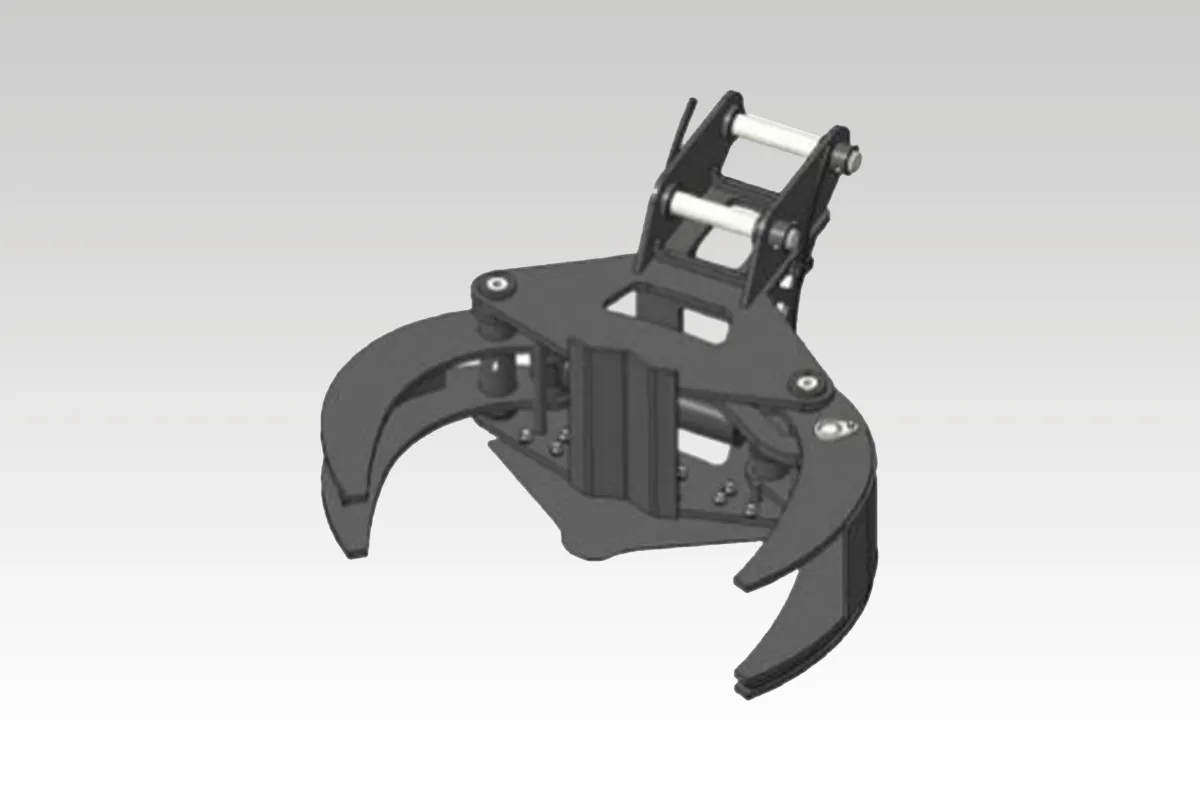
A skid steer tree shear is worth buying when it can cut the stems you encounter most often, leave the required stump height and fit the loader you intend to run. A headline cutting diameter alone does not establish any of those outcomes. It says little about forked stems, access on uneven ground or the time a crew spends moving cut material. Use this guide to build a purchase specification for the HCN HN41 Tree Shear without assuming that a published dimension, hydraulic setting or capacity applies to your configuration.
Start with site and stem selection. Use that information to qualify the carrier, check the mount and hydraulics, and set acceptance criteria before comparing quotes.
Define the clearing job before sizing the shear
Record the smallest, typical and largest stems at the intended cut height, not at breast height or at an arbitrary point above the ground. Note the species, whether the wood is live or dead, and how often the crew sees forks, leaning stems or dense clusters. Ask HCN which conditions support its cutting rating and which fall outside it. If only a few stems exceed the confirmed limits, price a separate method for those exceptions rather than letting them determine the attachment for the entire contract.
For a tree shear, working width and depth are better specified as access and cut geometry than as a continuous cutting swath. Ask for the overall installed width, the opening and usable stem clearance, and the attainable cut height on the proposed carrier. Opening width is not a cutting rating. A low cut shown on level pavement may not be achievable on rutted ground or beside rocks. If the contract requires below-grade removal or a surface ready for grading, scope stump and root removal separately.
Define where the cut material goes. A right-of-way crew leaving approved material in place has a different production target from a municipal crew that must stack it at a collection point. On sites dominated by brush rather than discrete stems, compare the job with the application of the HN38 Brush Cutter before budgeting for a shear. If separate stem collection is required, assess whether the HN14 Log Grapple Fork fits that task and carrier. Confirm its compatibility independently.
Match the loader by configuration, not tonnage alone
Use the Skid Steer Loader section to identify the host category, then work from the exact machine's documentation. Operating mass describes the configured carrier; rated operating capacity and manufacturer-approved attachment limits answer different questions. Record the model, serial range, coupler type and ballast. Ask HCN for the installed attachment mass and a drawing showing how far it projects from the attachment interface. Include any adapter in the assessment because it adds mass and can move the load farther forward.
Check the loader manufacturer's limits for the proposed combination and working conditions. Do not use rated operating capacity as permission to carry a cut stem, and do not assume that cutting performance establishes a handling rating. Confirm the required cab protection, operator visibility, site restrictions and exclusion zones from applicable manuals and site rules. If a supplier cannot verify fit for the intended configuration, treat the quote as conditional, even if the seller lists the same loader weight class.
Verify quick-attach and hydraulic compatibility separately
Request a mounting drawing and compare the upper engagement geometry and lower latch locations with the carrier plate. Confirm that the latches engage fully and that the attachment, fittings and hoses clear the loader through the permitted lift and tilt range. A plate can latch while a hose still rubs, stretches or gets pinched during movement. Specify hose lengths and coupler orientation for the actual machine rather than relying on a generic quick-attach description.
Get the allowable flow and pressure limits from HCN for the quoted HN41. Compare them with the machine's selected auxiliary flow mode and pressure settings, not just a brochure's maximum figures. Flow affects actuator speed; circuit pressure, cylinder geometry and the shear mechanism affect cutting force. More flow does not establish more cutting capacity. Confirm the control mode, coupler type, return restrictions and whether any additional line is required. If the machine has selectable flow modes, record the approved mode on the handover sheet. Do not raise relief settings to compensate for poor cutting performance.
Selection table: what to verify before releasing a purchase order
Use the HCN attachment catalog to navigate to the HN41 Tree Shear. Ask for the current specification and drawing for the configuration being quoted. Where a value is not confirmed, leave it open on the procurement sheet rather than borrowing a figure from another shear.
| Selection factor | Buyer input | Evidence to obtain |
|---|---|---|
| Stem range and access | Diameters at cut height, species, forks and approach constraints | Rated cut and its conditions, usable opening and installed width |
| Cut height | Maximum acceptable stump height and typical ground profile | Drawing or demonstration of the attainable cut height on the proposed loader |
| Carrier suitability | Exact loader, operating mass, rated operating capacity, coupler and ballast | Installed attachment mass and offset, checked against loader manufacturer limits |
| Hydraulic fit | Auxiliary circuit flow and pressure, modes and couplers | Approved operating limits, connection details and any return-line requirements |
| Quick-attach fit | Plate drawing or dimensions, plus any proposed adapter | Latch engagement, clearance and acceptable hose routing throughout movement |
| Duty cycle | Expected cutting bursts, shift pattern, terrain and ambient conditions | Representative trial covering cycle consistency, heat and interruptions |
| Service and ownership cost | Service capability, target uptime and material handling plan | Maintenance schedule, parts prices and lead times, and a scoped quote |
Measure duty cycle and total cost on the same job
Distinguish intermittent fence-line work from sustained clearing. In the first case, travel and positioning may dominate the shift. In the second, repeated cycles expose hydraulic heating and make service access more important. In a vendor-approved demonstration, run the intended carrier and circuit mode on a representative stem mix. Record cut quality, positioning time, retries, temperature warnings and the time needed to clear material. A successful cut on a single straight stem does not validate a shift of production.
Ask for the inspection schedule and parts list for the quoted build. Confirm how the cutting edge, pins, bushings, hoses and cylinder seals are inspected and serviced, which parts can be replaced in the field, and what tools or procedures the manufacturer requires. Follow the prescribed isolation and support procedures before servicing. A dealer or rental fleet should also confirm how operators will identify the approved carrier setup and report wear before it causes downtime.
For bids, calculate cost per accepted stem or per cleared area using the same definition of finished work. Include the delivered attachment price allocated over expected use, any adapter or installation cost, loader time, labor, wear parts, maintenance, downtime and the separate collection or disposal pass. Include rework if stump height or uncut stems can trigger a return visit. Use measured production over a representative work period as the denominator rather than extrapolating from an unloaded hydraulic cycle.
Buyer checklist before requesting a quote
- Describe the site: Send the typical and largest stem diameters, species, ground conditions and required finished stump height. Identify stems that need a separate method.
- Identify the carrier: Supply the exact loader model and serial range, operating configuration, coupler details and auxiliary hydraulic data.
- Confirm the supplied build: Request the dimensioned drawing, installed mass and offset, allowable hydraulic limits, and the list of supplied hoses, couplers and mounting hardware.
- Agree on acceptance: Define the stem mix, cut-height target, representative work period, and whether collection or stacking is included.
- Price service and transport: Confirm delivery terms, commissioning scope, maintenance instructions, spare-part pricing and expected lead times.
With those details in hand, request a configuration review from HCN. Ask for the carrier fit and outstanding exceptions to be recorded against the quoted build so the purchasing team, dealer and operator all work from the same specification.
Frequently Asked Questions
What size skid steer do I need for an HN41 Tree Shear?
There is no reliable tonnage-only answer. Send HCN the exact loader model, operating mass, rated operating capacity, coupler and ballast configuration. Check the loader manufacturer's attachment limits against the HN41's confirmed installed mass and forward offset.
Does the HN41 require a high-flow skid steer?
Do not infer a flow class from the attachment type. Ask HCN for the HN41's allowable flow and pressure limits and compare them with the loader's selected auxiliary circuit. Confirm the control mode, return requirements and couplers before ordering.
What stem diameter can the HN41 cut?
Request the current HN41 cutting specification and its test conditions from HCN. Give the supplier the stem diameters measured at the planned cut height, along with the species and any forked or multi-stem growth. Do not treat jaw opening as a rated cutting diameter.
Can a tree shear cut flush with the ground or remove roots?
Do not assume either. Confirm the attainable cut height for the proposed setup and terrain. A shear severs stems; root removal and below-grade work require a separate method.
Will a universal skid steer quick-attach plate guarantee fit?
No. Confirm plate geometry, latch engagement, clearance through the lift and tilt range, hydraulic coupler type and hose routing. A mount that locks correctly can still have clearance or hydraulic connection problems.
Does the HN41 also handle the cut stems?
Confirm any retention or handling function in writing for the quoted HN41 configuration. Do not assume that a cutting rating authorizes lifting or carrying. If stems need separate collection or stacking, price that operation into the job.
How should I compare two tree shear quotes?
Compare quotes against the same carrier, stem mix and finished-work requirement. Include freight, installation, wear parts, planned maintenance, downtime and separate material handling. Use a representative trial to estimate cost per accepted stem or cleared area.
Need exact hydraulic specs, drawings, or compatibility confirmation? Contact HCN with your carrier model and quantity.
 +86 185 5285 3111
 +86 185 5285 3111
 nancy@hcn-tech.com
