




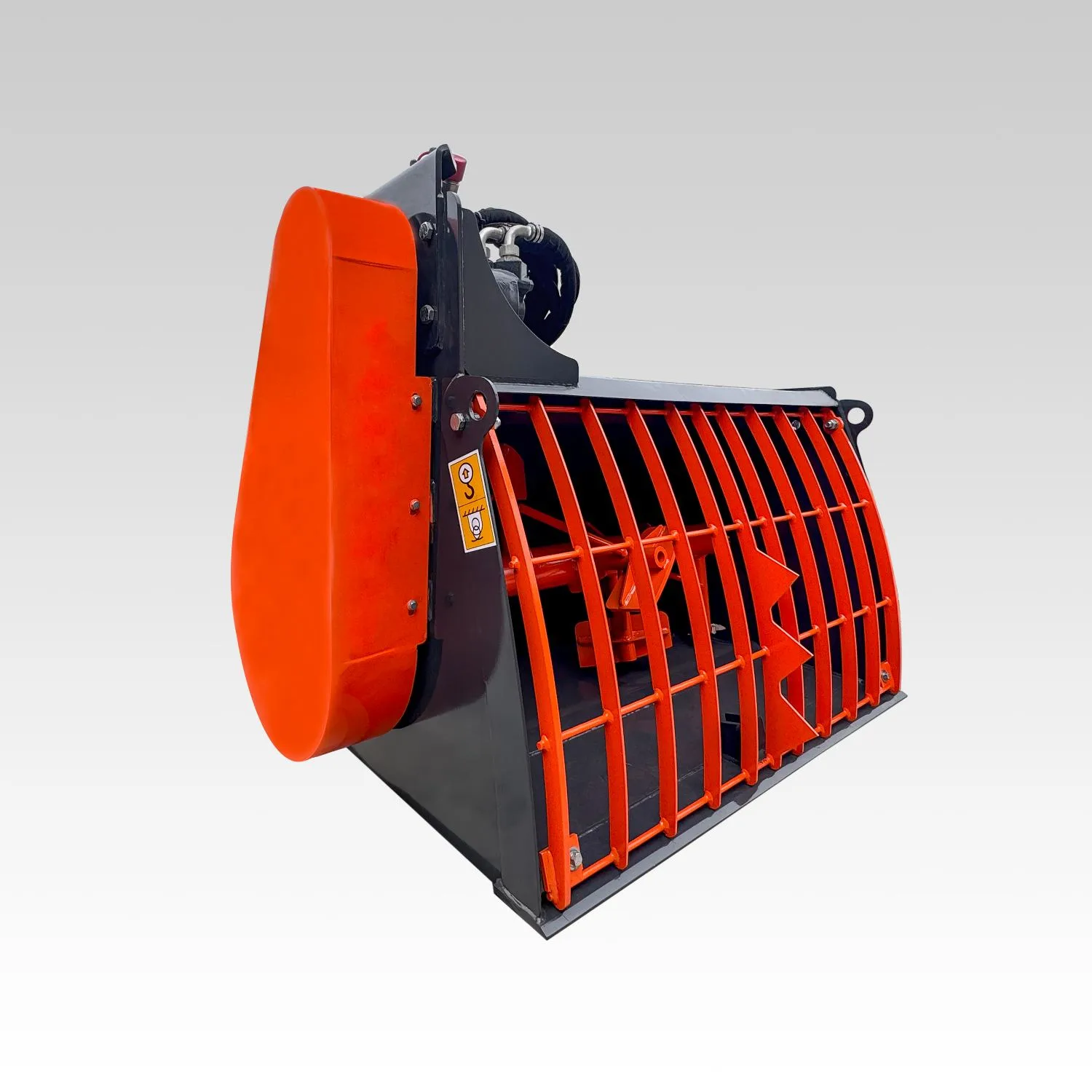
Concrete Mixer vs. Concrete Mixer Bucket: Which Skid Steer Attachment Is Right for Your Jobsite?
For construction contractors, equipment rental companies, and machinery dealers, on-site concrete mixing can be a practical solution when projects require relatively small quantities of concrete, frequent movement between work areas, or access to locations where ready-mix truck delivery is inconvenient.
Two attachment options worth considering are a hydraulic cement mixer and a concrete mixing bucket.
Although both can be operated by compatible skid steer or compact loaders, their working principles, material-handling methods, capacities, hydraulic requirements, and operating weights differ considerably.
Selecting the wrong attachment can result in insufficient hydraulic performance, excessive machine loading, inefficient material handling, or an unsuitable mixing and discharge process.
This guide compares two products currently listed by HCN Attachments Manufacture: the 0304 Cement Mixer and the 0310 Concrete Mixing Bucket.
Rather than focusing on marketing claims, the following sections explain how each attachment works, what its published specifications mean, and how equipment buyers can make a more informed purchasing decision.
1. What Is the Difference Between a Cement Mixer and a Concrete Mixing Bucket?
The most important difference is how the equipment handles the mixing process and raw materials.
1.1 Hydraulic Cement Mixer: Drum-Based Mixing
A hydraulic cement mixer uses a rotating drum to combine cement, sand, aggregates, water, and other approved ingredients.
Depending on the design, drum rotation can be controlled to assist with mixing and discharge.
HCN's 0304 Cement Mixer is a compact hydraulic attachment designed for skid steer and compact loader applications.
According to its published product description, the mixing drum can rotate in either direction, allowing operators to control the mixing process.
The 0304 is intended for smaller construction tasks, including pavements, driveways, renovation projects, foundations, and floors.
A drum-based attachment may be useful when:
Concrete is prepared in relatively small batches.
The jobsite has limited operating space.
Contractors need to move between multiple work locations.
Concrete quantities are modest or intermittent.
A compact attachment is preferable to a larger mixing system.
The 0304 has a published drum volume of 0.17 m³ and an output of 0.1 m³ per batch.
These two figures serve different purposes. Drum volume describes the physical mixing chamber, while batch output represents the specified concrete output.
Buyers should not treat the entire drum volume as usable concrete production capacity.
1.2 Concrete Mixing Bucket: Loading, Mixing, and Discharging
A concrete mixing bucket combines bucket-style material handling with hydraulic mixing.
Rather than relying entirely on a separate loading process, its bucket configuration can help operators collect aggregates and other appropriate materials before mixing them.
HCN's 0310 Concrete Bucket is designed to combine material handling and mixing within one attachment.
Its product description highlights hydraulic forward and reverse mixing, adjustable mixing components, and front or side discharge configurations depending on the model.
This type of attachment can be useful for:
Construction projects with repeated concrete mixing requirements.
Landscaping and hardscape installation.
Agricultural construction.
Small foundations and concrete pads.
Site preparation where concrete must be mixed and delivered around the working area.
However, the ability to load materials directly does not eliminate the need for accurate batching.
Cement, aggregates, water, and admixtures must still be measured according to the approved mix design.
2. HCN 0304 vs. 0310: Technical Specification Comparison
HCN publishes detailed specifications for both products.
| Specification | 0304 Cement Mixer | 0310 Concrete Mixing Bucket |
|---|---|---|
| Mixing arrangement | Rotating drum | Bucket with hydraulic mixing mechanism |
| Published capacity | 0.17 m³ drum volume | 0.45 m³ output per drum |
| Published output | 0.1 m³ per batch | 0.45 m³ per drum |
| Hydraulic flow | 40–80 L/min | 60–110 L/min |
| Maximum allowable pressure | 21 MPa | 21 MPa |
| Operating weight | 231 kg (theoretical) | 550–650 kg (theoretical, including mount) |
| Overall width | 1,232 mm | 1,340–2,135 mm |
| Overall height | 906 mm | 1,015–1,235 mm |
| Overall length | 1,008 mm | 875–1,850 mm |
| Mixing speed | 5–30 rpm | Not specified |
| Discharge arrangement | Reversible drum rotation | Front or front/side discharge depending on model |
| Published carrier type | Skid steer / compact loader | Skid steer / compact loader |
Source: HCN's official 0304 and 0310 product specification tables.
What do these numbers mean?
The 0304 has a substantially lower listed attachment weight and a lower minimum hydraulic flow requirement.
This makes it worth evaluating when working with compact equipment, subject to the actual carrier's capacity and hydraulic specifications.
The 0310 has a larger published per-drum output and several model configurations.
It may be more appropriate for operations that need a larger volume of mixed material per cycle and the ability to collect material through a bucket-style attachment.
However, higher nominal capacity does not automatically mean higher hourly productivity.
Cycle times, loading methods, material availability, mixing duration, discharge location, and operator experience must also be considered.
3. Choosing the Right Attachment Based on Concrete Volume
Concrete volume is often the first specification a buyer considers.
It is important, but it should not be evaluated in isolation.
3.1 Small, Intermittent Concrete Jobs
For projects requiring occasional batches, an attachment with a smaller output may be sufficient.
Examples include:
Repairing a short section of pavement.
Installing fence-post foundations.
Preparing small equipment pads.
Carrying out minor landscaping works.
Making repairs in areas with restricted access.
The HCN 0304 provides a published output of 0.1 m³ per batch.
For reference, a project requiring 1 m³ of concrete would theoretically require ten batches at that nominal output.
This is a volume calculation only. It does not establish the actual number of operating cycles required on site or account for material losses.
When working with small quantities, contractors may value a compact attachment that does not require a large amount of working space.
3.2 Larger or Repeated Mixing Requirements
For jobs requiring repeated concrete preparation, a mixing bucket may deserve closer consideration.
The HCN 0310 models have a published output of 0.45 m³ per drum.
At that nominal output, a 1 m³ requirement corresponds to approximately 2.22 drum outputs, meaning at least three drum loads if operating at or below the stated output.
Actual production depends on loading accuracy, mixing conditions, discharge completeness, and the required concrete specification.
A larger attachment may reduce the number of mixing cycles for a given project, but its additional weight and hydraulic demand must be accommodated by the carrier machine.
3.3 Why Hourly Productivity Cannot Be Determined from Capacity Alone
A supplier may advertise a mixer with a larger drum or bucket and suggest that it automatically offers higher productivity.
That conclusion is incomplete.
Consider two hypothetical operations.
The first uses a smaller mixer with well-organized aggregate storage, reliable material supply, and short discharge distances.
The second uses a larger bucket but spends considerable time moving between aggregate piles, measuring ingredients, and accessing discharge locations.
The second attachment may have greater nominal capacity without necessarily achieving higher hourly output.
A realistic productivity evaluation should include:
Time required to load ingredients.
Time required for mixing.
Travel distance to the discharge point.
Time required to discharge the concrete.
Time required to clean and prepare for the next cycle.
Machine maneuvering and site access limitations.
For larger fleet purchases, dealers and contractors should request operating demonstrations or conduct trials with their intended material and machine configuration.
4. Hydraulic Flow Requirements: 40–80 L/min vs. 60–110 L/min
Hydraulic compatibility is one of the most important technical considerations when selecting a concrete mixing attachment.
A mechanical mounting interface may fit a skid steer loader even when the machine does not have sufficient hydraulic flow for the attachment.
4.1 HCN 0304 Hydraulic Requirements
The 0304 Cement Mixer specification lists:
Hydraulic flow: 40–80 L/min.
Maximum allowable pressure: 21 MPa.
Variable mixing speed: 5–30 rpm.
The specified hydraulic flow range must be compared with the machine's actual auxiliary hydraulic output.
The available flow should be evaluated under the machine's intended operating conditions, not solely by consulting a general machine-series brochure.
Operators should also confirm that the machine can supply the required hydraulic circuit and that the mixer controls are compatible.
4.2 HCN 0310 Hydraulic Requirements
The 0310 Concrete Mixing Bucket range specifies:
Hydraulic flow: 60–110 L/min.
Maximum allowable pressure: 21 MPa.
These requirements apply to the four configurations currently shown in HCN's published table.
A carrier supplying less than the stated minimum flow should not be assumed capable of delivering satisfactory mixing performance.
Likewise, a machine capable of producing more than the attachment's maximum permitted flow must have an appropriate means of controlling the delivered flow.
4.3 Hydraulic Pressure Is Not the Same as Hydraulic Flow
Hydraulic flow and hydraulic pressure describe different aspects of hydraulic performance.
Flow is the volume of oil supplied over time.
Pressure is related to the load placed on the hydraulic circuit and the torque available to the hydraulic motor.
Both specifications are important.
An attachment may have sufficient available flow but still perform poorly if the system cannot maintain the required operating pressure under load.
Conversely, excess pressure can damage components if the attachment is operated beyond its allowable limits.
Always verify the machine's auxiliary pressure setting, pressure relief arrangement, return-line requirements, and connection specifications before purchasing.
The published 21 MPa figures are maximum allowable pressures, not instructions to operate continuously at that pressure.
5. Machine Capacity: Why Attachment Weight Matters
A common purchasing mistake is focusing on hydraulic flow while overlooking the attachment's weight.
The HCN 0304 has a published theoretical weight of 231 kg.
The HCN 0310 configurations weigh between 550 kg and 650 kg, including their mounting arrangements.
This difference has important implications for the carrier machine.
5.1 Calculate the Loaded Weight
The empty weight of a concrete mixing attachment is only part of the total load.
The carrier must also support the materials inside the mixer.
The approximate total carried mass is:
Total load = attachment mass + concrete and ingredient mass + other carried accessories
As an illustrative calculation, if 0.45 m³ of normal-weight concrete has an assumed density of 2,400 kg/m³, the material mass would be approximately:
0.45 × 2,400 = 1,080 kg.
Combined with the heaviest published 0310 attachment weight of 650 kg, the total would be approximately 1,730 kg before allowing for other accessories or differences in material density.
This is an example, not an HCN rated operating load or an approved machine configuration.
Buyers must check the actual machine's rated operating capacity, tipping characteristics, hydraulic lift capacity, load center, and operating conditions.
5.2 Consider the Load Center
Attachment geometry can significantly affect the machine's stability.
A load positioned farther forward from the machine's mounting plate produces a larger overturning moment.
Therefore, two attachments with similar total mass may not impose the same stability demands.
For concrete mixing buckets, the center of gravity also changes during loading, mixing, tilting, and discharge.
The carrier must remain stable throughout the full operating cycle.
5.3 Consider Transport and Jobsite Access
Larger mixing attachments may also affect:
Machine maneuverability.
Access through narrow gates.
Operating clearance around buildings.
Loading and unloading arrangements.
Safe travel on slopes or uneven surfaces.
Trailer and transport weight restrictions.
Equipment buyers should evaluate the complete machine-and-attachment configuration rather than selecting the attachment independently.
6. How to Select the Right HCN 0310 Concrete Mixing Bucket Model
The HCN website lists four configurations of the 0310 Concrete Bucket.
| Model | Length | Width | Height | Weight | Discharge |
|---|---|---|---|---|---|
| 031004 | 1,170 mm | 1,835 mm | 1,215 mm | 560 kg | Front / side |
| 0310L04 | 1,850 mm | 1,340 mm | 1,235 mm | 573 kg | Front / side |
| 031006 | 1,170 mm | 2,135 mm | 1,215 mm | 650 kg | Front / side |
| 0310A04 | 875 mm | 1,500 mm | 1,015 mm | 550 kg | Front |
All four models have the same published output per drum of 0.45 m³, hydraulic flow range of 60–110 L/min, and maximum allowable pressure of 21 MPa.
6.1 Width and Site Access
The 031006 has the greatest published overall width at 2,135 mm.
The 0310L04 is narrower at 1,340 mm but has a greater overall length.
Buyers working on confined sites should evaluate both width and length rather than assuming that a narrower model will always be easier to operate.
6.2 Discharge Arrangement
The 031004, 0310L04, and 031006 are listed with front and side discharge arrangements.
The 0310A04 is listed with front discharge.
The most suitable configuration depends on the pouring location, available machine access, and required discharge direction.
For example, side discharge can be worth evaluating when the carrier must remain alongside a narrow work area rather than approach the pouring location directly.
However, the buyer should confirm the actual discharge mechanism, required clearance, and included components before ordering.
6.3 Weight and Carrier Selection
The listed attachment weights range from 550 kg to 650 kg.
The carrier's rated operating capacity and lift geometry should be checked for the fully loaded attachment.
A heavier model may not be appropriate simply because the machine has sufficient hydraulic flow.
Mechanical fitment, loaded stability, and hydraulic compatibility are separate requirements.
7. Which Attachment Is Better for Different Applications?
The optimal choice depends on the work being performed.
| Application | Attachment Worth Evaluating | Main Consideration |
|---|---|---|
| Small pavement repairs | 0304 Cement Mixer | Smaller batch requirement |
| Residential landscaping | 0304 or 0310 | Job volume and access |
| Small concrete foundations | 0304 or 0310 | Required volume and mix specification |
| Agricultural pads | 0310 Mixing Bucket | Repeated loading and mixing |
| Multiple small repair locations | 0304 Cement Mixer | Compact handling and mobility |
| Larger repeated mixing jobs | 0310 Mixing Bucket | Higher nominal output per drum |
| Confined jobsite | Depends on configuration | Dimensions, load center, clearance |
| Rental fleet | Both, for different customers | Carrier compatibility and maintenance |
These are selection considerations, not guaranteed performance recommendations.
Construction and Renovation
For small renovation projects, the ability to mix concrete at the working location may reduce dependence on separate stationary mixing equipment.
A smaller drum mixer can be useful when contractors need controlled quantities.
A mixing bucket may be preferable when site conditions allow material collection and repeated mixing with a compatible loader.
Landscaping and Hardscaping
Landscaping contractors may require concrete for garden structures, paving foundations, curbs, posts, and small retaining-wall elements.
Attachment selection depends on the size of each pour, access restrictions, and the ability to keep the concrete mix consistent.
For projects requiring structural concrete or specified strength classes, mixing procedures must follow the approved project requirements.
Agricultural Construction
Agricultural sites may require concrete for equipment pads, small building foundations, posts, and maintenance facilities.
Where projects are spread across a large property, loader-mounted mixing attachments can offer operational flexibility.
The buyer should still evaluate the travel distance between loading and discharge locations, particularly when working with fresh concrete that has limited allowable handling time.
8. Concrete Quality: What Buyers Should Not Overlook
An attachment can mix concrete, but it does not automatically guarantee a particular concrete strength or consistency.
Concrete quality depends on the materials, batching accuracy, water content, mixing time, handling, placement, and curing conditions.
8.1 Accurate Material Proportions
Concrete should be prepared according to the approved mix design.
Adding water merely to improve workability can reduce strength and durability.
Contractors should use an appropriate measuring procedure for cement, aggregates, water, and admixtures.
8.2 Mixing Consistency
Operators should establish a mixing procedure appropriate to the attachment and concrete formulation.
The mixture should be inspected for uniform distribution of ingredients before discharge.
Actual mixing duration depends on the equipment and the material being processed.
HCN's published specifications do not establish a verified mixing time for either product, so buyers should request operating guidance for the selected model.
8.3 Cleaning After Use
Residual concrete can harden inside the attachment and affect future operation.
The mixing drum, paddles, discharge mechanism, and accessible material-contact surfaces should be cleaned in accordance with the operating instructions after use.
Cleaning must only be performed after the equipment has been safely isolated and moving components are prevented from operating.
Operators should not reach into a mixer or bucket while the hydraulic system is energized.
Concrete wash water and slurry should also be collected and disposed of according to applicable environmental requirements.
9. Maintenance Considerations for Rental Companies and Dealers
Rental companies should consider maintenance requirements before adding hydraulic mixing attachments to their fleets.
Unlike simple buckets, mixing equipment includes powered components that require regular inspection.
Key areas include hydraulic hoses, fittings, seals, drive components, mixing elements, mounting structures, and discharge systems.
Daily Checks
Before operation, inspect for:
Damaged or leaking hydraulic hoses.
Loose mounting hardware.
Hydraulic couplers that are not securely connected.
Unusual noise or vibration during operation.
Damaged mixing components.
Hardened material remaining from previous use.
Obstructions in the discharge mechanism.
Spare-Parts Planning
Equipment dealers should ask their supplier which service parts are available for each model.
Useful items may include hydraulic seals, hoses, couplers, wear components, and model-specific mixing or discharge parts.
The exact spare-parts list should be confirmed against the purchased configuration.
Operator Training
Rental customers should understand the machine's hydraulic and lifting limitations before operating the attachment.
Training should also address safe loading, mixing, travel, discharge, cleaning, and shutdown procedures.
For fleet managers, preventing incorrect operation can be as important as the original purchase price.
10. Purchasing Checklist for International Equipment Dealers
Before ordering a cement mixer or concrete mixing bucket from any supplier, request complete technical and commercial information.
Carrier Machine Information
Machine manufacturer and exact model.
Rated operating capacity.
Auxiliary hydraulic flow.
Hydraulic pressure and relief settings.
Quick-attach mounting dimensions.
Available electrical or hydraulic controls.
Intended operating environment.
Attachment Information
Exact attachment model
Drum capacity and usable output.
Empty weight and fully loaded weight.
Overall dimensions.
Mixing and discharge arrangement.
Hydraulic hoses and couplers included.
Operating and cleaning instructions.
Spare-parts information.
Warranty and service procedures.
Commercial and Export Information
Product quantity.
Private-label requirements, if applicable.
Destination country and port.
Packaging specifications.
Incoterms and quotation currency.
Production lead time.
Product-specific compliance documents required for the destination market.
A complete request for quotation should make clear which details are mandatory and which options can be proposed by the manufacturer.
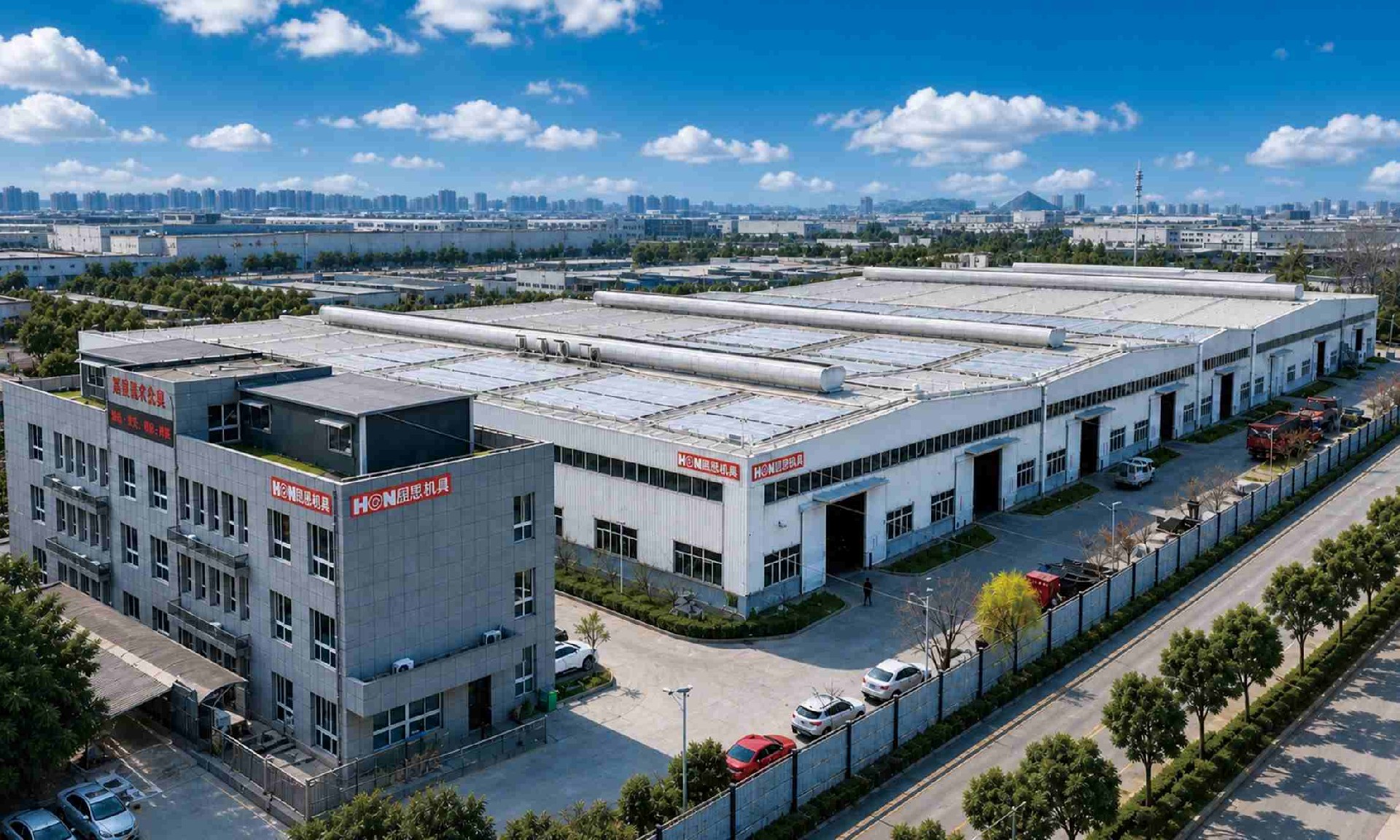
11. Sourcing Concrete Mixing Attachments from HCN
HCN Attachments Manufacture Co., Ltd. offers construction equipment attachments for skid steer loaders, compact loaders, wheel loaders, backhoe loaders, and excavators.
Its Construction Attachments range includes both the 0304 Cement Mixer and 0310 Concrete Bucket.
The company's website describes in-house manufacturing processes covering cutting, machining, welding, assembly, and inspection, together with OEM and private-label services for international equipment dealers.
For concrete mixing attachments, the purchasing process should begin with technical verification.
Buyers can provide their carrier machine model, hydraulic flow and pressure, intended concrete volume, site conditions, quantity, and destination country.
HCN can then review the mounting and hydraulic requirements for the selected attachment configuration.
International distributors should also confirm packaging, replacement-part arrangements, and product-specific documentation before finalizing a purchase order.
Learn more about HCN Attachments or review the following products:
12. Conclusion: Which Concrete Mixing Attachment Should You Choose?
The HCN 0304 Cement Mixer and 0310 Concrete Mixing Bucket are designed around different operational priorities.
The 0304 is worth considering for smaller batches, compact applications, and carrier machines that can accommodate its published 40–80 L/min hydraulic requirement.
The 0310 provides a larger published per-drum output and several configurations, making it worth evaluating for repeated mixing and material-handling applications. It requires 60–110 L/min of hydraulic flow and has a substantially greater empty weight.
Neither attachment should be selected based solely on nominal mixing capacity.
The final decision should account for:
Required concrete volume per job.
Available hydraulic flow and pressure.
Machine rated operating capacity and loaded stability.
Site access and operating clearance.
Mixing, transport, and discharge requirements.
Maintenance and spare-parts planning.
For contractors, a correctly matched attachment can help organize small-scale concrete production around the existing equipment fleet.
For dealers and rental businesses, accurate technical matching helps reduce the risk of supplying equipment that is unsuitable for the customer's machine or application.
Need help selecting a concrete mixing attachment?
Send HCN your skid steer or compact loader model, hydraulic specifications, required concrete capacity, quantity, and destination country.
Contact HCN Attachments to Request Specifications and a Quotation
Frequently Asked Questions
1. What is the difference between a cement mixer and a concrete mixing bucket?
A hydraulic cement mixer uses a rotating drum to mix concrete ingredients, while a concrete mixing bucket combines bucket-style material handling with a powered mixing mechanism. The better option depends on batch size, loading arrangements, and machine capacity.
2. What hydraulic flow does the HCN 0304 Cement Mixer require?
The published hydraulic flow range is 40–80 L/min, with a maximum allowable pressure of 21 MPa. The carrier machine must be checked against these requirements before ordering.
3. How much concrete can the HCN 0310 Mixing Bucket produce?
HCN lists an output of 0.45 m³ per drum for the four published 0310 configurations. Actual production per hour depends on loading, mixing, travel, discharge, and other operating conditions.
4. Can any skid steer loader operate a concrete mixing bucket?
No. A suitable machine must have the required hydraulic capacity, mounting interface, rated operating capacity, and stability for the attachment when fully loaded. Mechanical attachment compatibility alone is insufficient.
5. Which attachment is better for small concrete projects?
The 0304 Cement Mixer may be worth evaluating for smaller, intermittent batches because it has a lower published attachment weight and nominal batch output. The project requirements and machine specifications should determine the final choice.
6. Does a larger mixing bucket always provide higher productivity?
No. Nominal capacity does not account for material loading, mixing duration, travel, discharge, and cleaning. Buyers should compare complete operating cycles rather than capacity alone.
7. How heavy is the HCN 0310 Concrete Mixing Bucket?
The published theoretical empty weights, including the mounting arrangement, range from 550 kg to 650 kg depending on the model. The weight of concrete and other carried materials must be added when evaluating the carrier machine's capacity.
8. What information should I send HCN for a concrete mixer quotation?
Provide the exact machine model, hydraulic flow and pressure, rated operating capacity, required mixing output, mounting details, quantity, OEM requirements if any, and destination country.
 +86 185 5285 3111
 +86 185 5285 3111
 nancy@hcn-tech.com
