




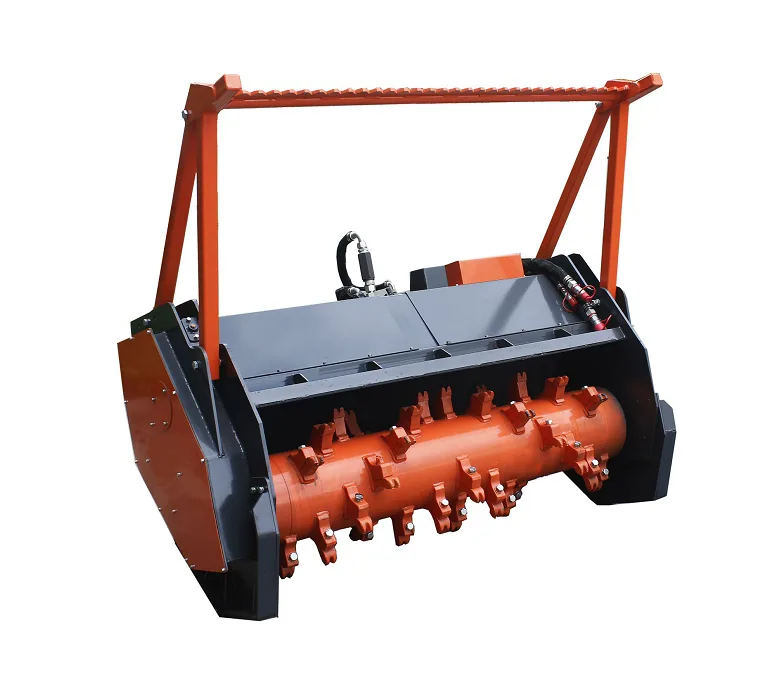
Choosing a forestry mulcher for a skid steer is not simply a matter of selecting the widest attachment or the machine with the largest engine. Hydraulic flow, operating pressure, available horsepower, lifting capacity, cutting width and the type of vegetation being cleared all influence whether a mulcher will perform efficiently.
For contractors working on right-of-way maintenance, site preparation, property clearing, firebreak construction or orchard and vineyard maintenance, the relationship between the skid steer and the forestry mulcher is particularly important. A mismatched attachment can limit productivity even when the host machine appears large enough for the job.
HCN's 0513 Series Forestry Mulcher is designed for high-flow skid steers and uses a hydraulic axial piston motor with a synchronous belt drive system. The product information specifies a flow range of 24–32 GPM, a maximum pressure of 3045 psi and a minimum loader power requirement of 75 HP. The product is also available in several configurations, with operating widths ranging from 1000 mm to 2100 mm across the listed models.
This guide explains the main factors contractors and equipment buyers should evaluate before selecting a skid steer forestry mulcher.
Why Hydraulic Matching Matters on a Forestry Mulcher
A forestry mulcher converts hydraulic power from the skid steer into rotational energy at the cutting drum. The hydraulic system therefore has a direct influence on how effectively the attachment can maintain drum speed when the teeth encounter dense brush, branches and standing trees.
Hydraulic flow is commonly expressed in gallons per minute (GPM), while hydraulic pressure is measured in PSI or MPa. These two figures describe different aspects of the system.
Hydraulic flow affects the volume of hydraulic oil supplied to the motor and influences motor speed.
Hydraulic pressure represents the force available within the hydraulic system and contributes to the motor's ability to produce torque.
Engine horsepower determines how much mechanical power the skid steer can supply to the hydraulic system.
Cooling capacity becomes increasingly important during extended high-load operation.
A forestry mulcher can place a sustained demand on the host machine. Unlike an attachment used for occasional bucket loading, mulching can require continuous hydraulic power while the drum is engaged with vegetation.
For this reason, checking the hydraulic specifications before purchase is one of the most important steps in selecting a forestry mulcher.
Start With the Skid Steer's Auxiliary Hydraulic Flow
The first specification to check is the auxiliary hydraulic flow available from the skid steer.
HCN lists a 24–32 GPM flow range for its 0513 Series Forestry Mulcher. This places the attachment firmly in the high-flow attachment category and means that the host machine should have an auxiliary hydraulic system capable of operating within the attachment's stated range.
Before ordering, equipment buyers should check the actual auxiliary hydraulic specifications of the skid steer rather than relying only on the machine's engine horsepower.
Important information to confirm includes:
Standard or high-flow auxiliary hydraulics
Rated hydraulic flow
Maximum auxiliary hydraulic pressure
Hydraulic connection type
Case drain requirements, if applicable
Manufacturer's recommended operating range
Hydraulic cooling capacity
The difference between standard-flow and high-flow machines can be significant when selecting demanding attachments. A skid steer may have sufficient lifting capacity and engine power but still be unsuitable if its auxiliary hydraulic system cannot provide the required flow.
Do Not Select a Mulcher Based on GPM Alone
Hydraulic flow is important, but it should not be evaluated in isolation.
A machine operating near the lower end of an attachment's recommended flow range may behave differently from a machine operating near the upper end. The final result also depends on hydraulic pressure, engine power, system efficiency, vegetation density and operator technique.
For HCN's 0513 Series, the listed flow range is 24–32 GPM. Buyers should therefore compare the attachment's requirements with the actual auxiliary flow specification of the intended skid steer before making a purchasing decision.
How Much Horsepower Does a Forestry Mulcher Need?
Horsepower is another major consideration when selecting a skid steer forestry mulcher.
HCN specifies a minimum loader power requirement of 75 HP for the 0513 Series. The model specifications also identify adaptive machine requirements of 85 HP or more for some configurations and 100 HP or more for larger configurations.
This distinction is important because not every 0513 model has the same operating dimensions or weight.
The listed configurations include models with operating widths of:
1000 mm
1550 mm
1850 mm
2100 mm
The listed weights range from approximately 700 kg to 1235 kg, while the required host-machine lifting capacity increases across the models.
When choosing a configuration, contractors should therefore consider both hydraulic power and the physical size of the host machine.
Why More Horsepower Does Not Automatically Mean Better Results
It is tempting to assume that a larger skid steer will always produce better mulching results. In practice, attachment compatibility still matters.
An oversized host machine may provide more power than the attachment can efficiently use, while an undersized machine may struggle to maintain hydraulic performance when the mulcher is working continuously.
The objective is to create a balanced combination in which the skid steer has sufficient hydraulic capacity, engine power, lifting capacity and stability for the selected attachment.
Match Cutting Width to the Job
Cutting width should be selected according to the working environment rather than simply choosing the widest available model.
A wider forestry mulcher can cover more ground during a pass, but it can also increase attachment weight and hydraulic demand. A narrower attachment may be easier to maneuver in restricted areas, around trees or along narrow rights-of-way.
HCN's 0513 Series product information includes a 60-inch configuration and also lists models with different operating widths. The product page identifies applications including utility line and right-of-way maintenance, site preparation, property maintenance, disaster mitigation, firebreak construction and orchard or vineyard maintenance.
These applications can require very different approaches.
For Open Land Clearing
When the working area is relatively open and the machine has adequate capacity, a wider cutting configuration can help cover more ground per pass.
However, buyers should calculate the total attachment weight and ensure that the skid steer remains within its safe operating and lifting capabilities.
For Right-of-Way Maintenance
Utility corridors and roadside vegetation often require maneuverability as well as cutting performance. The operator may need to work close to structures, poles, fences, drainage areas or uneven terrain.
In these conditions, attachment width should be balanced against machine visibility, maneuverability and the required working envelope.
For Orchards and Vineyards
Vegetation management in orchards and vineyards can involve more confined working spaces than large-scale land clearing. Machine width and operator visibility can become particularly important when working between established planting rows.
Consider the Type of Vegetation
Not all vegetation presents the same workload.
Grass and light brush generally require less cutting resistance than hardwood, thick branches or standing trees. A contractor who primarily clears light vegetation may have different attachment requirements from a land-clearing contractor dealing with woody material.
HCN's 0513 Series uses a drum with heat-treated, bolt-on forged alloy teeth and a triple helix claw teeth layout. The product information states that the configuration is intended for hardwood, stumps and branches and identifies a listed cutting capacity of up to 8 inches for the referenced 60-inch forestry drum mulcher configuration.
These specifications provide a useful starting point, but actual productivity will depend on vegetation species, material density, moisture, terrain and operating technique.
Understand the Role of the Mulcher Motor
The hydraulic motor is one of the key components connecting the skid steer hydraulic system to the cutting drum.
HCN's 0513 Series uses a hydraulic axial piston motor and synchronous belt drive system. The product also includes a pressure gauge and an independent cooling system with a radiator.
These features are particularly relevant for contractors who expect extended periods of operation.
A forestry mulcher can generate significant heat during continuous hydraulic work. Maintaining appropriate hydraulic conditions and monitoring the system can help operators identify abnormal operating conditions before they become larger problems.
Why Cooling Should Be Part of the Selection Process
Hydraulic oil temperature can become an important operating consideration when an attachment is used continuously at high load.
Instead of considering only maximum flow, buyers should look at the complete hydraulic system of the host machine and attachment. The machine's cooling system, auxiliary circuit design and operating environment all influence how effectively the equipment can work over a full shift.
HCN's independent cooling system and radiator are part of the attachment's design and should be considered when evaluating the mulcher for sustained applications.
Check the Attachment Weight and Loader Capacity
Hydraulic performance is only one side of compatibility.
The attachment also has to be physically supported by the skid steer. HCN's listed 0513 models range from approximately 700 kg to 1235 kg, with host-machine lifting capacity requirements increasing from more than 1 tonne to more than 1.2 tonnes across the listed configurations.
Before purchasing, contractors should check:
Rated operating capacity of the skid steer
Attachment operating weight
Loader tipping load
Lift capacity at the required working height
Machine counterweight and stability
Terrain conditions
Transport requirements
A heavy forestry attachment can change the handling characteristics of a compact machine. The goal is not simply to attach the mulcher successfully, but to maintain a stable and predictable operating combination.
Match the Mulcher to the Work You Actually Perform
The right attachment depends heavily on the type of work performed by the contractor.
| Application | Key Selection Consideration |
|---|---|
| Right-of-way maintenance | Maneuverability, visibility and hydraulic performance |
| Site preparation | Cutting capacity, durability and sustained productivity |
| Property clearing | Width, cutting capacity and machine stability |
| Firebreak construction | Consistent vegetation removal and controlled working depth |
| Orchard and vineyard maintenance | Attachment dimensions and maneuverability |
| Disaster mitigation | Machine capacity, hydraulic performance and attachment durability |
This application-based approach is more useful than selecting an attachment solely according to price or advertised cutting width.
Common Mistakes When Buying a Skid Steer Forestry Mulcher
1. Ignoring Auxiliary Hydraulic Flow
One of the most common mistakes is assuming that engine horsepower automatically means sufficient attachment performance. Buyers should verify the actual auxiliary hydraulic flow and pressure specifications.
2. Choosing the Widest Attachment Available
A wider attachment is not necessarily the best attachment. Weight, machine stability, maneuverability and hydraulic requirements must also be considered.
3. Focusing Only on Maximum Tree Diameter
Cutting capacity is only one specification. Daily productivity also depends on vegetation density, material type, machine power, operator technique and the amount of time spent positioning the machine.
4. Forgetting About Cooling
Long periods of hydraulic work can place additional demands on the machine's cooling system. Contractors should consider the complete hydraulic package rather than treating flow rate as the only important number.
5. Not Checking Attachment Weight
A forestry mulcher can be considerably heavier than general-purpose skid steer attachments. Attachment weight must be matched to the loader's operating capacity and stability requirements.
A Practical Checklist Before Buying
Before ordering a skid steer forestry mulcher, equipment buyers can use the following checklist:
Confirm the skid steer's auxiliary hydraulic flow.
Confirm maximum auxiliary hydraulic pressure.
Determine whether high-flow hydraulics are required.
Check the skid steer's horsepower.
Compare the host machine with the attachment's minimum power requirement.
Check the attachment's operating weight.
Verify the loader's rated operating capacity.
Choose a cutting width appropriate for the worksite.
Consider the vegetation diameter and density.
Evaluate cooling requirements for extended operation.
Confirm hydraulic hose and coupler compatibility.
Discuss the intended application with the attachment supplier before purchase.
Why the Hydraulic System Should Drive the Buying Decision
A forestry mulcher is one of the more hydraulically demanding attachments that can be installed on a skid steer. Because the attachment depends on continuous hydraulic power, compatibility should be established before considering optional features or attachment width.
For the HCN 0513 Series, the published specifications provide a clear reference point: a 24–32 GPM flow range, maximum pressure of 3045 psi, a minimum loader power requirement of 75 HP and multiple configurations with different operating widths, weights and host-machine requirements.
This gives contractors a practical framework for comparing the attachment with their existing skid steer.
Explore the HCN Forestry Mulcher
HCN's 0513 Series Forestry Mulcher is designed for high-flow skid steers and is intended for vegetation management applications such as site preparation, right-of-way maintenance, property clearing, firebreak construction and orchard or vineyard maintenance.
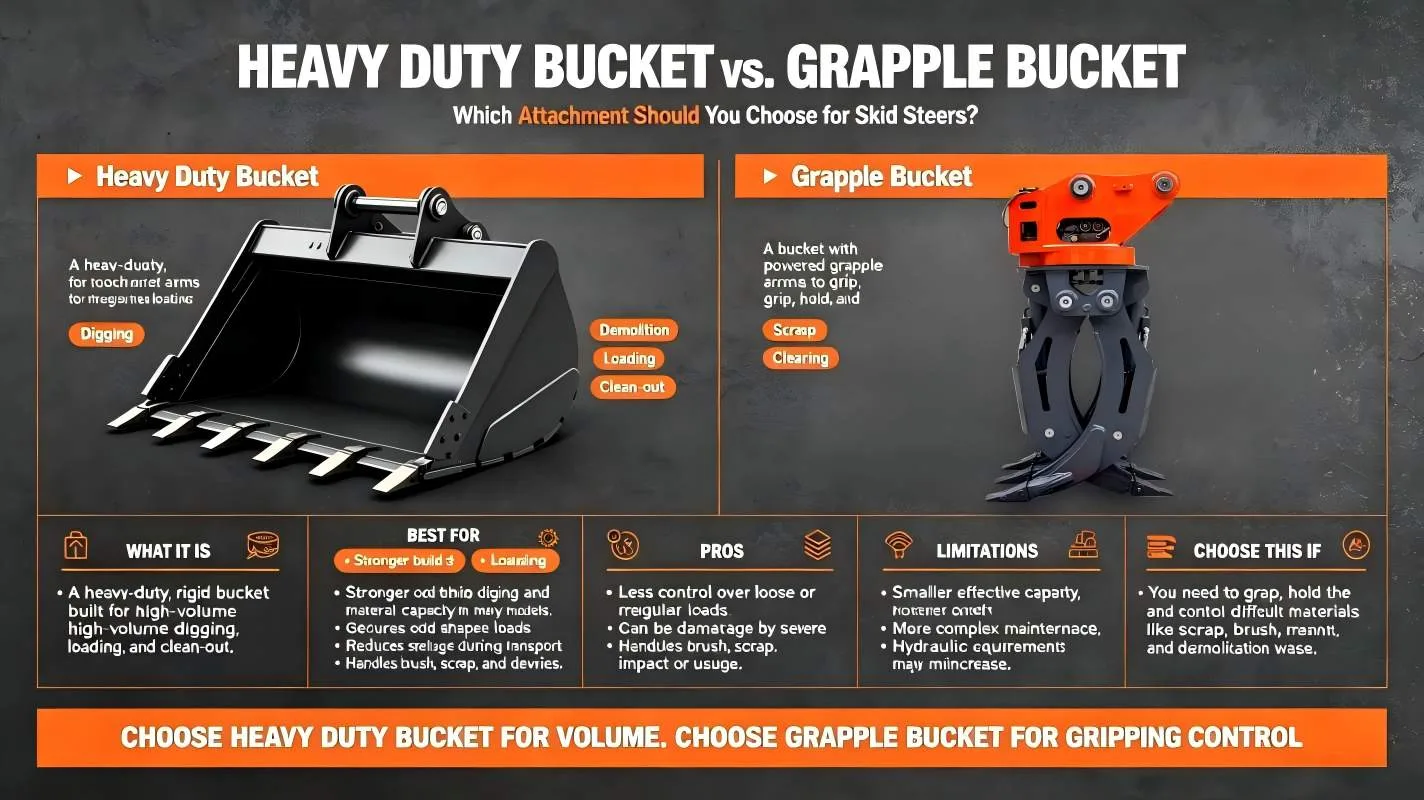
For contractors evaluating multiple attachments for a broader land-clearing operation, HCN also offers other equipment for different applications. A Heavy Duty Grapple Bucket can be used for handling bulky materials and debris, while the 0502 Series Tree Spade is designed for digging and transplanting trees.
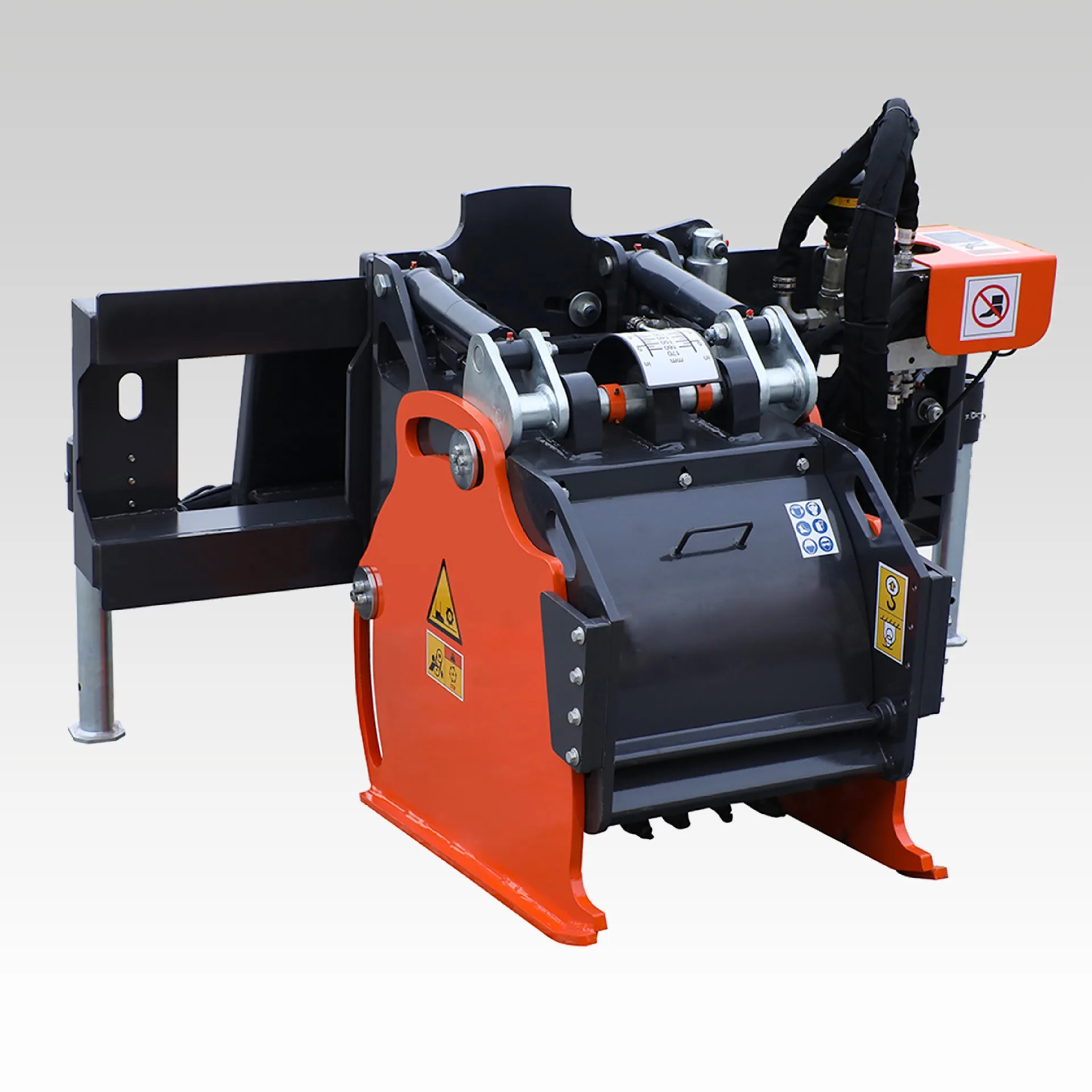
For road and surface preparation work, HCN's 0206 Series Cold Planer provides a different type of skid steer attachment for milling and pavement-related applications.
Final Thoughts
The best skid steer forestry mulcher is not necessarily the largest model or the attachment with the highest advertised cutting capacity. The better choice is the model that matches the hydraulic system, horsepower, lifting capacity and operating environment of the host machine.
Start with hydraulic flow and pressure. Then check horsepower, attachment weight, cutting width and the type of vegetation you need to process. Finally, consider how the machine will actually be used throughout a working day.
For buyers considering the HCN 0513 Series, the published specifications provide a useful starting point for this evaluation. By matching the attachment to the skid steer before purchase, contractors can make a more informed equipment decision and avoid many of the compatibility problems associated with hydraulic attachments.
Frequently Asked Questions About Skid Steer Forestry Mulchers
1. What hydraulic flow does a skid steer forestry mulcher need?
Hydraulic requirements vary by attachment. HCN's 0513 Series Forestry Mulcher lists a flow range of 24–32 GPM, so the auxiliary hydraulic system of the skid steer should be checked against the selected model before purchase.
2. How much horsepower does a forestry mulcher require?
The HCN 0513 Series lists a minimum loader power requirement of 75 HP. Some of the listed configurations specify adaptive machine requirements of 85 HP or more, while larger configurations list requirements of 100 HP or more.
3. Do forestry mulchers require high-flow hydraulics?
Many forestry mulchers are designed for high-flow skid steers because continuous mulching can require substantial hydraulic power. The HCN 0513 Series is specifically designed for high-flow skid steers and lists a 24–32 GPM flow range.
4. How do I choose the right forestry mulcher size?
Consider the skid steer's hydraulic flow, horsepower, rated operating capacity, attachment weight and the required cutting width. The worksite and vegetation type should also influence the choice.
5. What can a skid steer forestry mulcher be used for?
Forestry mulchers can be used for vegetation clearing, right-of-way maintenance, site preparation, property maintenance, firebreak construction, disaster mitigation and orchard or vineyard maintenance.
6. What is the maximum cutting capacity of the HCN 0513 Forestry Mulcher?
The HCN product information lists a cutting capacity of up to 8 inches for the referenced 60-inch forestry drum mulcher configuration. Actual cutting performance depends on vegetation type, density, machine power and operating conditions.
7. Why is hydraulic cooling important for forestry mulching?
Forestry mulching can involve extended periods of hydraulic operation. Adequate cooling helps the hydraulic system manage heat generated during continuous work. HCN's 0513 Series includes an independent cooling system with a radiator.
8. Should I choose the widest forestry mulcher available?
Not necessarily. A wider attachment may cover more ground per pass, but it can also increase attachment weight and machine requirements. The best width depends on the host machine and the working environment.
 +86 185 5285 3111
 +86 185 5285 3111
 nancy@hcn-tech.com
