




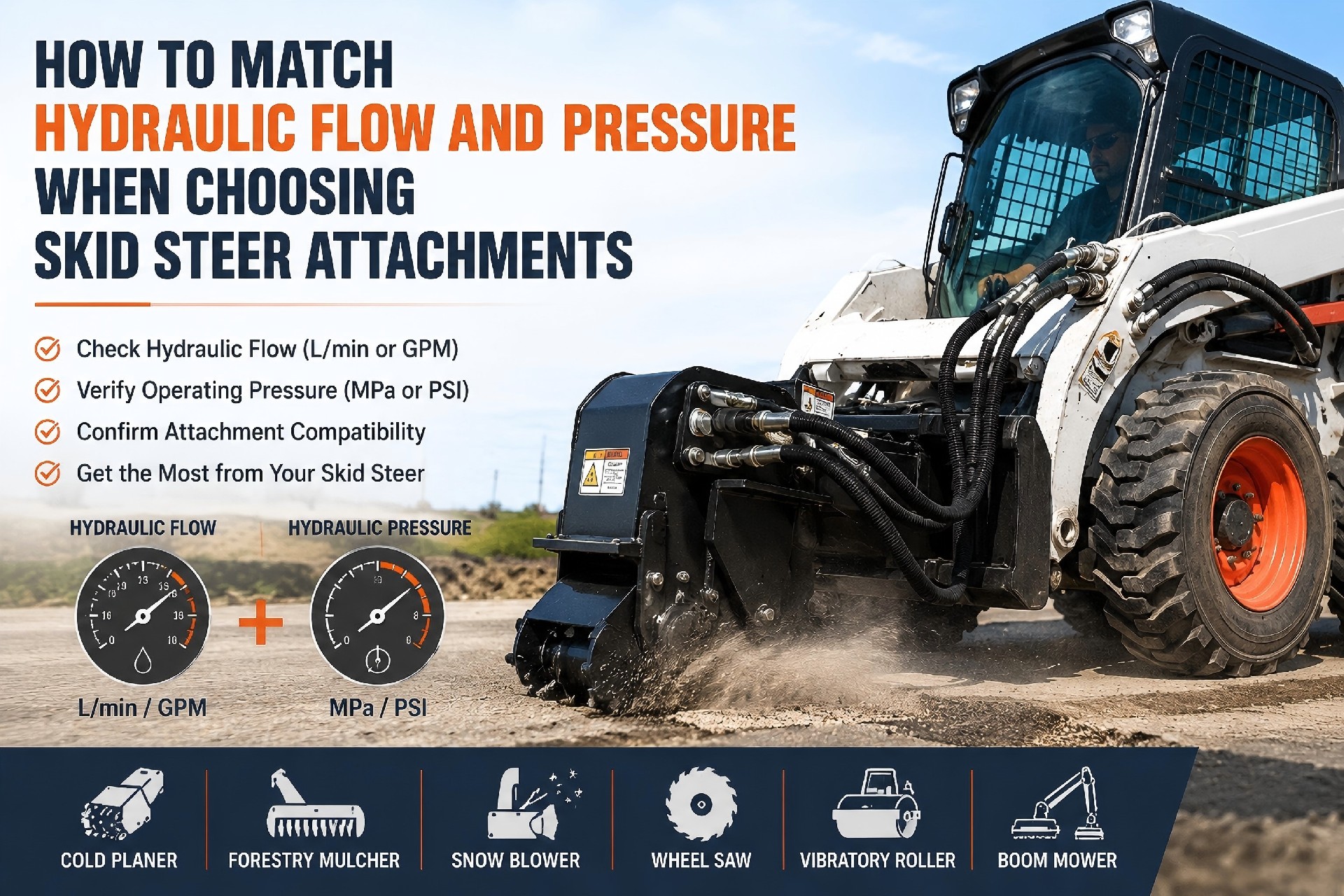
Choosing a skid steer attachment is not simply a matter of selecting the right working width, bucket capacity, or attachment size. For hydraulically powered attachments, one of the most important compatibility checks is the relationship between the attachment's hydraulic flow and pressure requirements and the loader's auxiliary hydraulic system.
A skid steer can physically connect to an attachment and still be a poor match for it. If the auxiliary hydraulic system cannot provide the required flow or pressure, the attachment may not deliver the expected performance. In some applications, selecting a hydraulic attachment that is too demanding for the host machine can also lead to inefficient operation and unnecessary hydraulic-system stress.
For contractors, equipment dealers, rental fleets, municipalities, landscaping companies, forestry operators, and machinery procurement teams, hydraulic compatibility should therefore be checked before comparing attachment price or specifications.
HCN's current product range provides a useful example of why this matters. Its attachment portfolio includes standard-flow and higher-flow equipment covering applications such as sweeping, cold planing, forestry mulching, snow removal, trenching, road maintenance, mowing, compaction, and material handling.
Why Hydraulic Flow Matters
Hydraulic flow is normally expressed in liters per minute (L/min) or gallons per minute (GPM). It describes the volume of hydraulic oil supplied to an attachment's motor or hydraulic circuit over a given period.
For many hydraulic attachments, flow has a direct relationship with operating speed and available hydraulic power. However, higher flow does not automatically mean that an attachment will perform better on every loader.
The key question is:
Does the skid steer provide a hydraulic flow range that matches the attachment's specified operating range?
For example, HCN's SR770T Mini Track Skid Steer Loader lists an attachment hydraulic flow rate of 45–60 L/min and attachment oil supply pressure of 18 MPa. This is different from the SR2200T Compact Track Loader, which lists a standard attachment hydraulic flow rate of 85 L/min, an optional high-flow rate of 135 L/min, and maximum accessory oil supply pressure of 21 MPa.
This difference becomes important when the attachment requires substantial hydraulic flow.
A small loader may be well suited to buckets, forks, or certain lighter hydraulic attachments while being unsuitable for a high-flow cold planer or forestry mulcher. Conversely, installing a low-flow attachment on a high-flow loader does not mean that the attachment should simply be operated at maximum available flow.
The attachment manufacturer's specified operating range should always be the starting point.
Hydraulic Flow vs. Hydraulic Pressure
Flow and pressure are related, but they are not interchangeable.
Hydraulic Flow
Flow primarily influences the speed at which a hydraulic motor or circuit can operate.
Hydraulic Pressure
Pressure is related to the force or torque that the hydraulic system can generate.
A simple way to think about the two is:
Flow is closely associated with hydraulic motor speed, while pressure is closely associated with available hydraulic force or torque.
An attachment therefore needs both parameters to be considered.
For example, HCN's 0206 Series Cold Planer lists a working pressure of 21 MPa. Its listed models have different flow requirements: the 020612 requires 120–130 L/min, while the 020618 and 020620 require 130–140 L/min. Their working widths also change from 300 mm to 450 mm and 500 mm respectively.
This is an important procurement point: do not assume that every model in an attachment series has the same hydraulic requirement.
Why Attachment Model Matters
One of the most common mistakes in attachment selection is matching the host machine to a product category rather than to the exact attachment model.
Consider HCN's Cold Planer range:
| Attachment | Working Width | Working Depth | Hydraulic Flow | Pressure |
|---|---|---|---|---|
| 020612 | 300 mm | 150 mm | 120–130 L/min | 21 MPa |
| 020618 | 450 mm | 150 mm | 130–140 L/min | 21 MPa |
| 020620 | 500 mm | 150 mm | 130–140 L/min | 21 MPa |
The figures above are product-specific. They should not be treated as a universal hydraulic requirement for every cold planer.
A procurement team should therefore ask for the exact attachment model and compare its hydraulic requirements against the exact loader configuration.
High-Flow Attachments Require Special Attention
Some of the most demanding skid steer attachments are designed specifically for high-flow hydraulic systems.
HCN's 0513 Series Forestry Mulcher, for example, is designed for high-flow skid steers. Its published specification lists a 24–32 GPM flow range and a maximum pressure of 3,045 psi. The attachment has a 60-inch cutting width and an 8-inch stated cutting capacity.
This is a very different hydraulic requirement from a general-purpose bucket or other mechanically simple attachment.
The same principle applies to road-maintenance equipment.
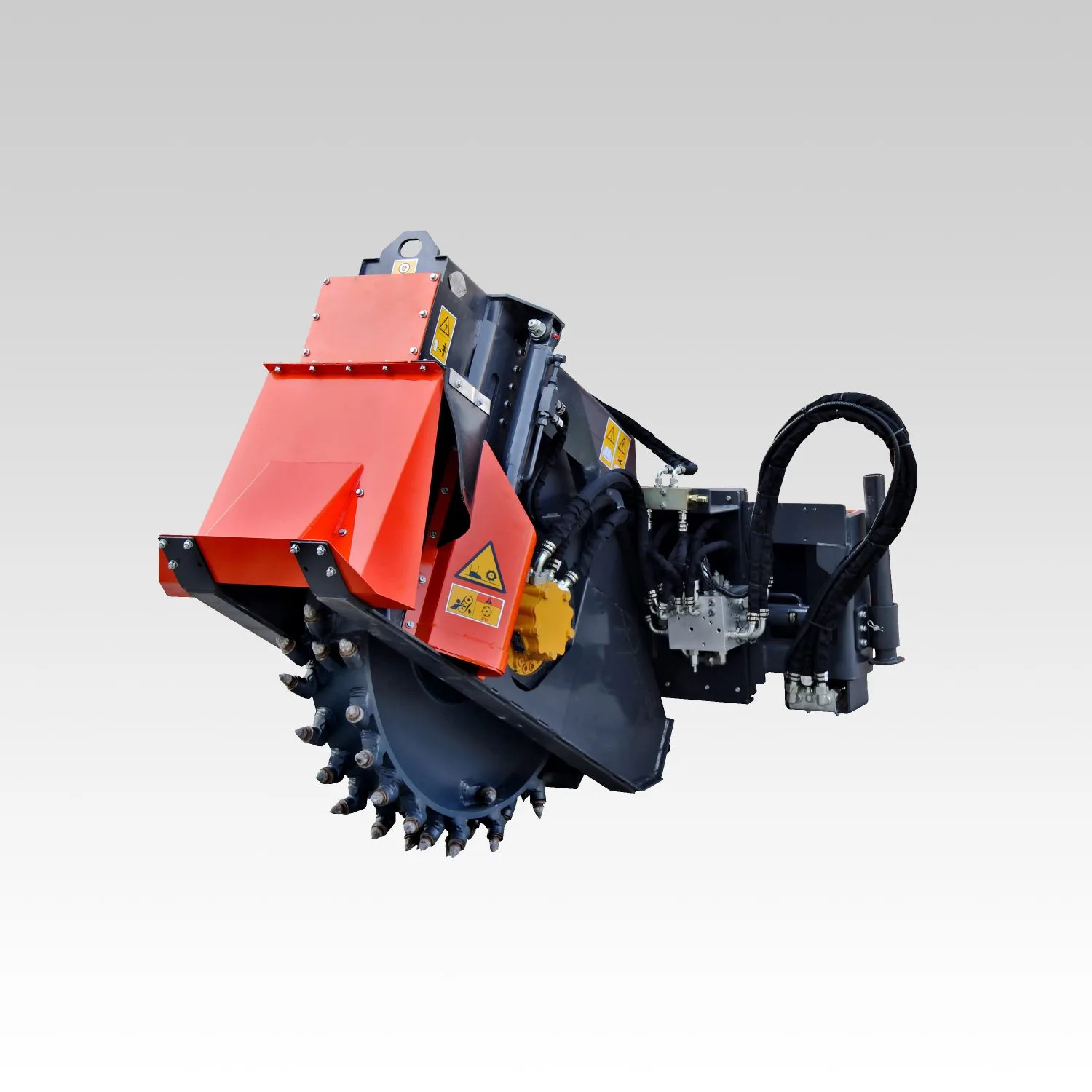
HCN's Wheel Saw models list flow requirements ranging from 40–80 L/min for one model to 90–150 L/min for another, while the product information specifies a working pressure of 21 MPa.
For a contractor purchasing equipment for trenching, pavement cutting, or municipal utility work, the hydraulic system should therefore be checked before selecting the attachment width or cutting depth.
Comparing Different Attachment Applications
Hydraulic compatibility becomes even more important when one skid steer is expected to operate multiple attachments.
A fleet manager may want one loader to handle:
Road milling
Snow removal
Forestry clearing
Sweeping
Compaction
Mowing
Trenching
General material handling
The hydraulic requirements can vary substantially between these applications.
Cold Planer
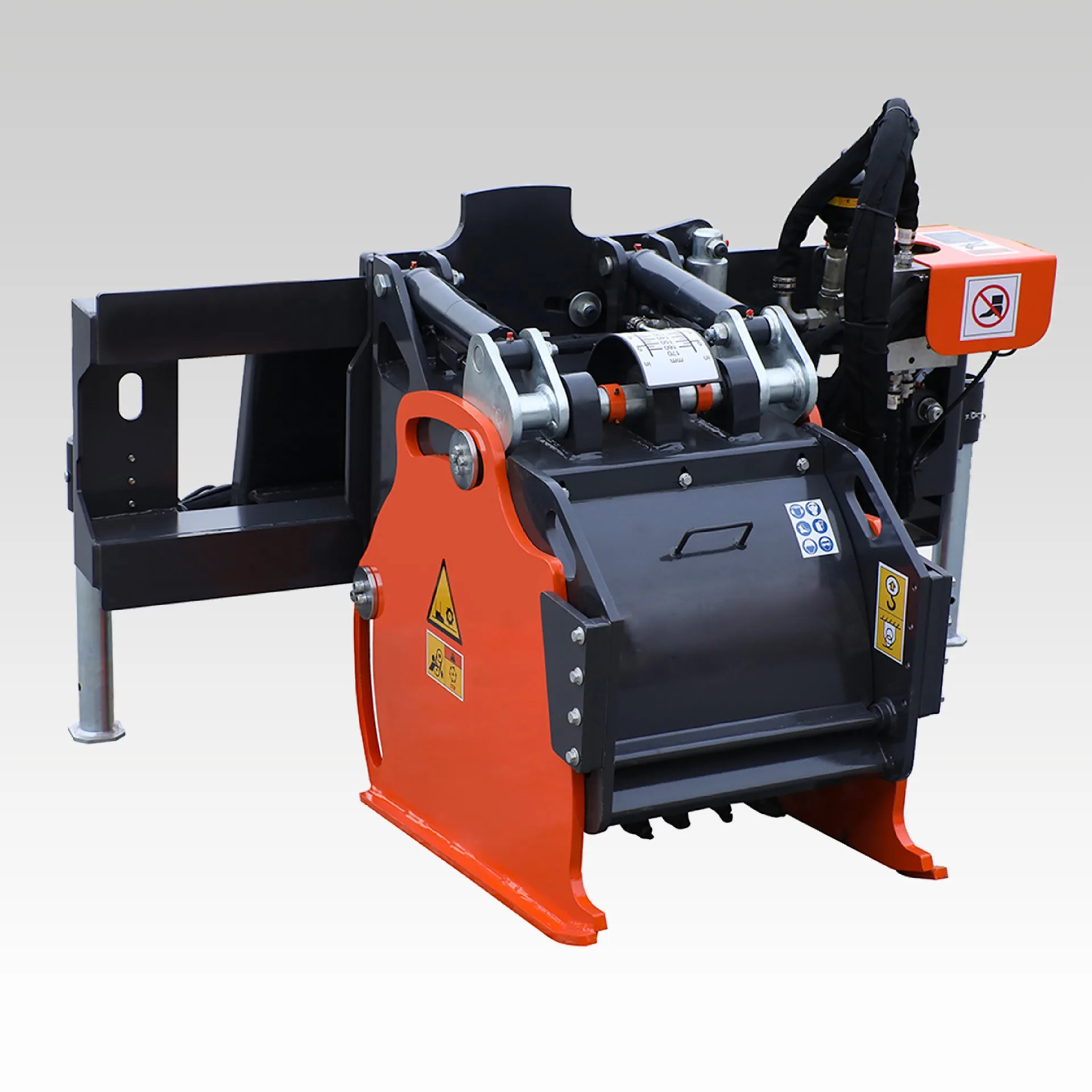
HCN's 0206 Series Cold Planer is designed for asphalt and concrete milling applications, including pavement repair, pothole and frost-heave repair, curb cutting, lane-stripe removal, and surface preparation. Its published models require approximately 120–140 L/min, depending on model.
This makes hydraulic capacity a primary consideration when pairing it with a loader.
Forestry Mulcher
The HCN 0513 Series Forestry Mulcher is specifically designed for high-flow skid steers and lists a 24–32 GPM flow range. It is intended for processing brush, trees, branches, and other vegetation.
For forestry contractors, the loader should therefore be evaluated as a hydraulic power unit as well as a carrier.
Snow Blower
HCN's 0209H Snow Blower lists a hydraulic flow range of 75–150 L/min and a maximum allowable pressure of 20 MPa. The attachment is intended for skid steer loaders with high hydraulic flow.
This is particularly relevant for contractors who operate the same loader in different seasons.
A loader that works well with a general bucket may not necessarily have the hydraulic capacity required by a large hydraulic snow blower.
Vibratory Roller
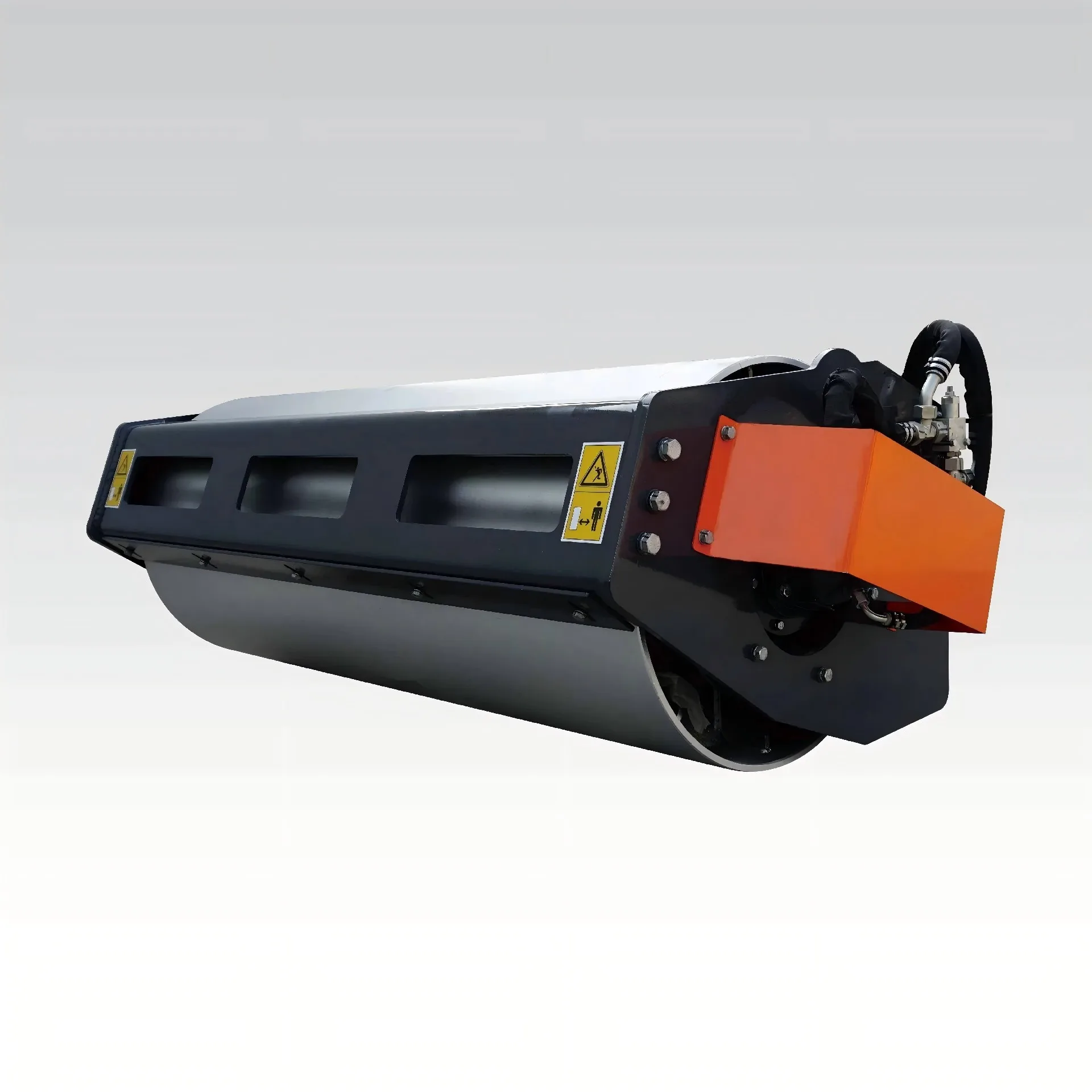
The HCN 0205 Vibratory Roller is another useful example. The listed models 020560 and 020572 require 60–70 L/min and 20 MPa working pressure. They are suitable for skid loaders or small wheel loaders.
Compared with the Cold Planer range, the hydraulic requirement is substantially different.
Boom Mower
HCN's 052840 Boom Mower lists a required hydraulic flow of 75–100 L/min, maximum working pressure of 21 MPa, and a 1,000 mm trimming width.
This illustrates why attachment selection should start with the host machine's auxiliary hydraulic specifications rather than the attachment category alone.
A Practical Hydraulic Compatibility Table
| HCN Attachment | Published Hydraulic Requirement | Typical Application |
|---|---|---|
| 0206 Cold Planer | 120–140 L/min depending on model | Road repair, milling, pavement preparation |
| 0513 Forestry Mulcher | 24–32 GPM | Forestry, vegetation clearing |
| 0209H Snow Blower | 75–150 L/min | Snow removal |
| Wheel Saw | 40–150 L/min depending on model | Road maintenance, trenching, utilities |
| 0205 Vibratory Roller | 60–70 L/min | Compaction |
| 052840 Boom Mower | 75–100 L/min | Vegetation management |
Important: These figures are product-specific and should not be interpreted as a universal flow requirement for the entire attachment category. Exact model compatibility should always be confirmed before purchase.
How to Check a Skid Steer Before Buying an Attachment
1. Identify the Exact Loader Model
Do not rely only on engine horsepower.
The hydraulic configuration can vary between loader models and sometimes between standard-flow and high-flow versions.
HCN's own loader range demonstrates this difference. The SR770T is listed at 45–60 L/min, while the SR2200T provides 85 L/min standard flow and 135 L/min with the optional high-flow system.
2. Confirm Auxiliary Hydraulic Flow
Find the loader's actual auxiliary hydraulic flow specification.
Then compare it with the attachment's required operating range.
If the attachment requires 120–140 L/min and the loader provides only 60 L/min, the machine should not be treated as a compatible carrier simply because the quick-attach plate fits.
3. Confirm Hydraulic Pressure
Check the loader's auxiliary hydraulic pressure and compare it with the attachment's specified working or maximum allowable pressure.
Pressure should not be treated as a substitute for insufficient flow.
4. Check Hydraulic Connections
The physical hydraulic connection also matters.
Before shipment or installation, buyers should confirm:
Hydraulic hose configuration
Coupler type
Auxiliary circuit requirements
Case drain requirements where applicable
Electrical control requirements
Whether the attachment requires standard-flow or high-flow operation
5. Check Machine Stability and Rated Capacity
Hydraulic compatibility is only one part of the selection process.
The attachment's weight, dimensions, working position, and operating load must also be appropriate for the carrier.
For example, the SR770T has a published operating weight of approximately 2,976 lb and a rated load of approximately 772 lb, while the SR2200T lists an operating weight of approximately 9,347 lb and a rated load of approximately 2,425 lb.
This is why a suitable hydraulic connection does not automatically mean that the attachment is appropriate for the machine.
Quick-Attach Compatibility Is Not Enough
Universal or quick-attach mounting systems make attachment changes faster, but they do not eliminate the need for technical compatibility checks.
A buyer should treat compatibility as a multi-step process:
Machine → Mounting Interface → Hydraulic Flow → Hydraulic Pressure → Electrical Controls → Attachment Weight → Application
A quick-attach plate only addresses one part of that chain.
This is especially important for equipment dealers and rental companies, because one loader may be expected to support multiple attachments over its service life.
What Should Contractors Consider When Building an Attachment Fleet?
For a contractor purchasing several attachments for one skid steer, the most useful approach is to identify the hydraulic capability of the loader first.
General Material Handling
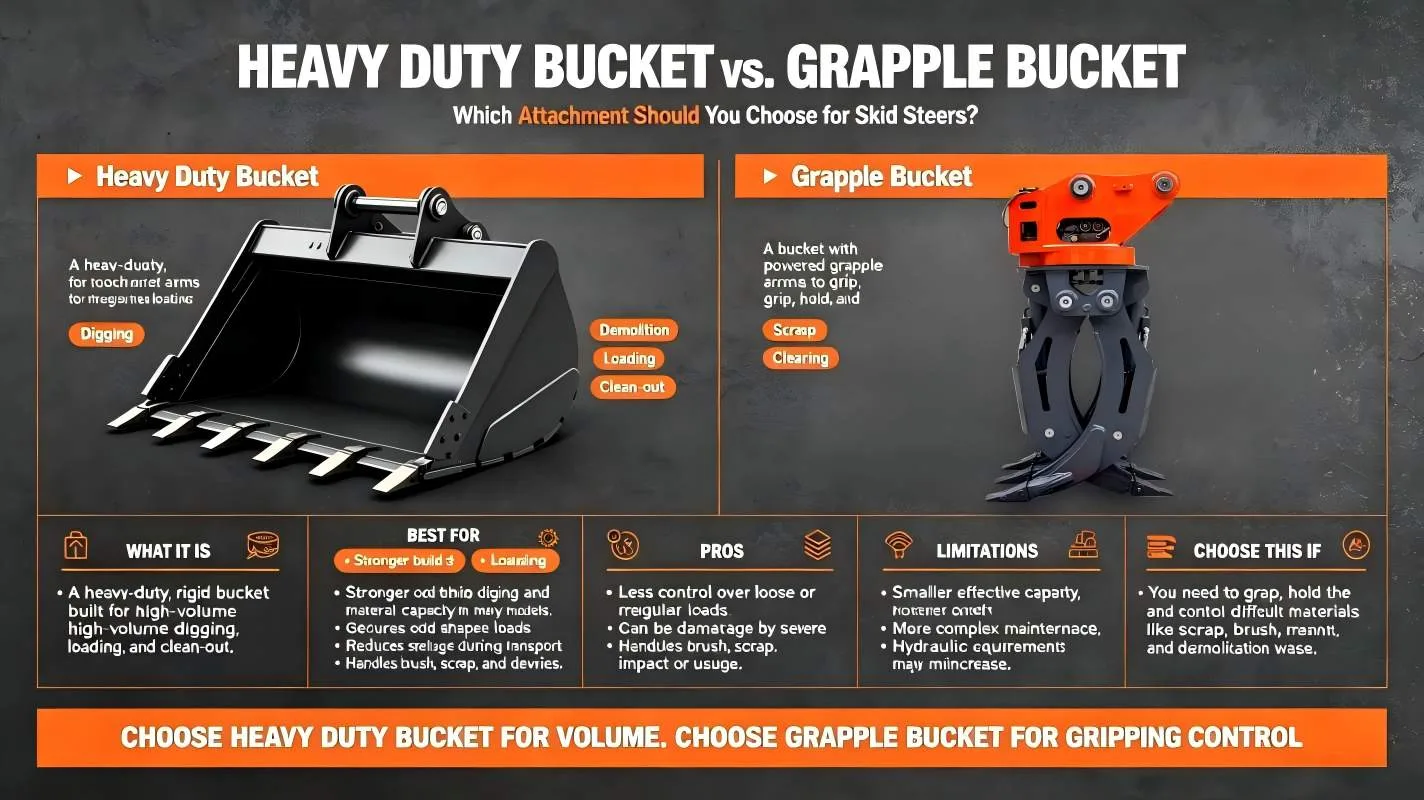
Consider buckets, grapple buckets, pallet forks, and other attachments where the hydraulic requirements are relatively straightforward.
HCN's Heavy Duty Pallet Fork is intended for moving bulky, bagged, or palletized materials and is positioned for construction, landscaping, agriculture, industrial, and municipal applications.
Road Maintenance
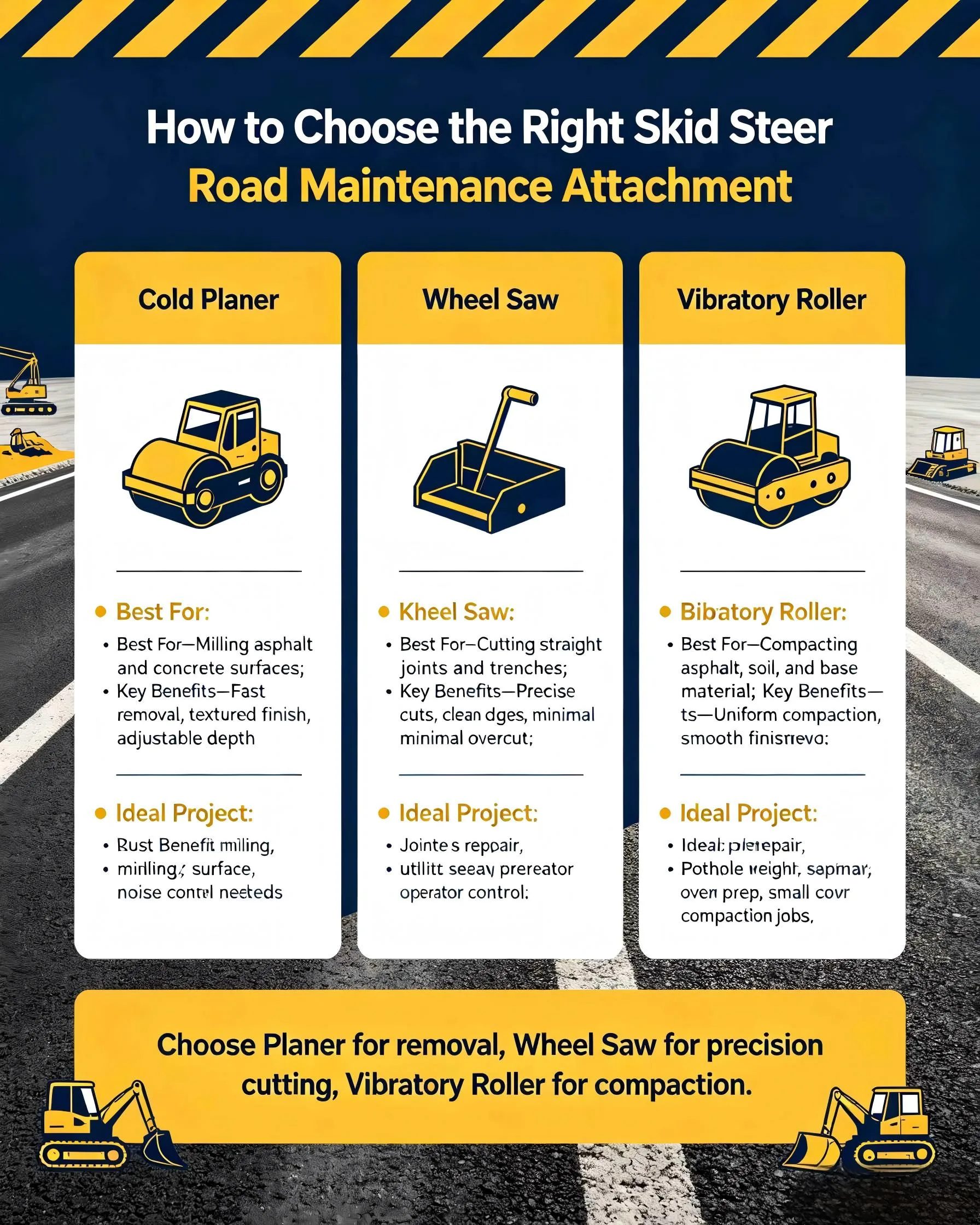
If pavement repair is a core activity, compare the hydraulic requirements of the Cold Planer and Wheel Saw against the loader's auxiliary circuit before selecting a model.
Forestry
For vegetation clearing and mulching, hydraulic capacity becomes particularly important because the 0513 Series Forestry Mulcher is designed for high-flow skid steers.
Snow Removal
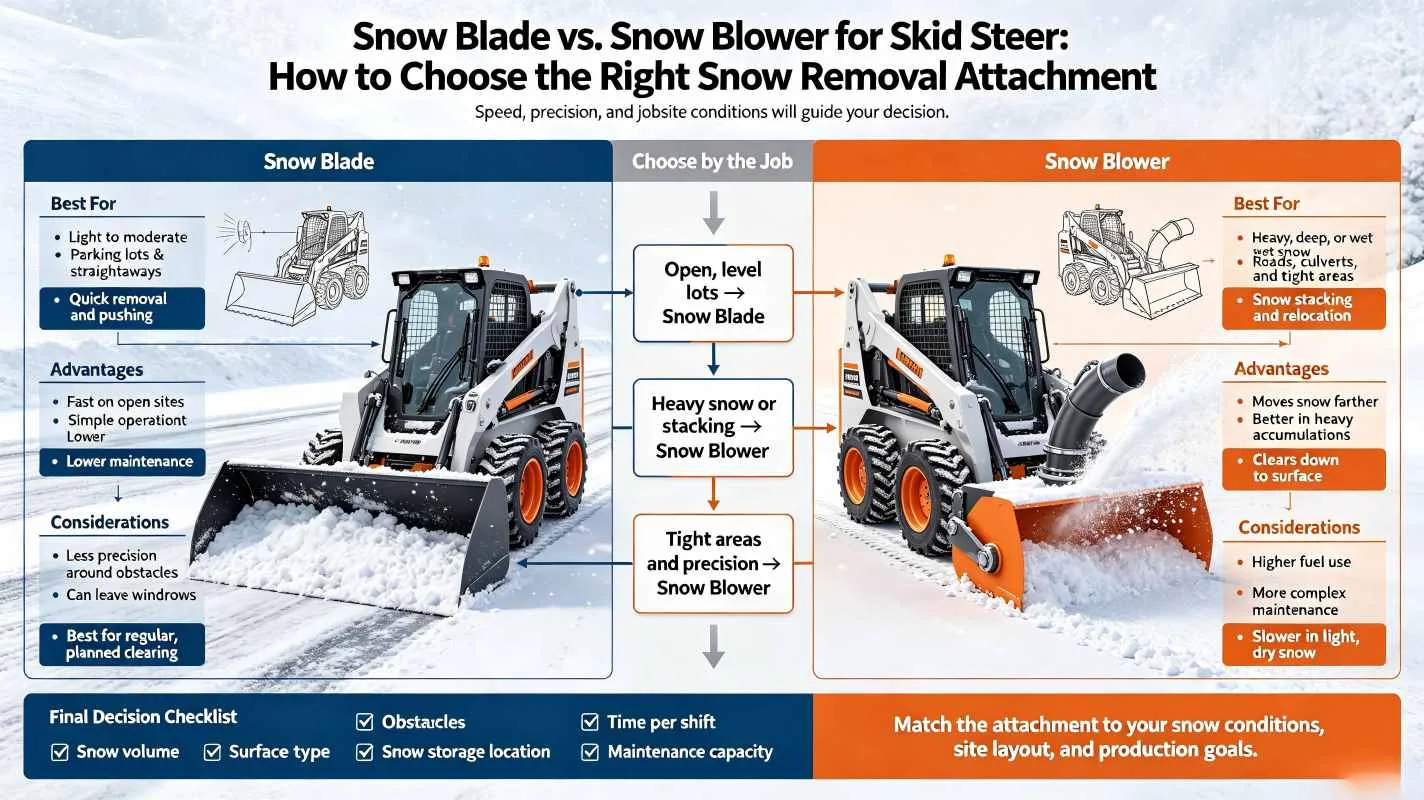
For snow contractors, compare the loader's auxiliary hydraulic capability with the 0209H Snow Blower specification before choosing the attachment configuration. HCN also offers a Snow Blade, which represents a different snow-removal approach and should be evaluated according to the intended application.
Common Hydraulic Matching Mistakes
Mistake 1: Choosing by Horsepower Alone
Engine horsepower does not provide the complete picture of auxiliary hydraulic capability.
Mistake 2: Assuming All Attachments Use the Same Flow
HCN's product specifications show significant differences between attachment categories and individual models.
Mistake 3: Using the Highest Available Flow Without Checking the Attachment
An attachment should be operated within its specified hydraulic range. More hydraulic flow is not automatically better.
Mistake 4: Ignoring Pressure Requirements
A loader can have sufficient flow but still require a pressure check before an attachment is selected.
Mistake 5: Ignoring Auxiliary Electrical Controls
Some attachments require electrical controls in addition to hydraulic connections. The HCN 0209H Snow Blower, for example, specifies electro-hydraulic control and requires buyers to match the control option to the skid steer loader.
Mistake 6: Treating the Attachment Category as the Specification
A "cold planer," "snow blower," or "wheel saw" is not a single hydraulic specification. Different models can have different flow requirements.
Skid Steer Attachment Procurement Checklist
Exact skid steer or compact track loader model
Standard-flow or high-flow hydraulic configuration
Auxiliary hydraulic flow in L/min or GPM
Auxiliary hydraulic pressure
Hydraulic coupler type
Case drain requirement, if applicable
Electrical control requirements
Attachment operating weight
Rated operating capacity of the host machine
Attachment working width
Working depth where applicable
Intended material and operating environment
Required attachment model
Transport and shipping requirements
Replacement wear parts and maintenance requirements
If any of these items are unclear, the buyer should provide the machine model and intended application to the attachment manufacturer before finalizing the purchase.
FAQ: Skid Steer Hydraulic Attachment Selection
1. How do I know if my skid steer can run a hydraulic attachment?
Start by checking the loader's auxiliary hydraulic flow and pressure, then compare those figures with the exact attachment model's published requirements. Mounting compatibility alone is not sufficient.
2. What is more important for a hydraulic attachment, flow or pressure?
Both matter, but they affect different aspects of hydraulic performance. Flow is closely associated with hydraulic motor speed, while pressure is associated with available hydraulic force or torque. The attachment's specified operating range should be followed.
3. Does a high-flow skid steer work with every attachment?
Not necessarily. A high-flow loader can provide more hydraulic capacity, but the attachment still needs to be operated within its specified hydraulic range. The exact attachment model and hydraulic circuit should be checked.
4. What hydraulic flow does an HCN Cold Planer require?
HCN's 0206 Series Cold Planer models list different flow requirements. The 020612 is specified at 120–130 L/min, while the 020618 and 020620 are specified at 130–140 L/min.
5. What hydraulic flow does the HCN Forestry Mulcher require?
The HCN 0513 Series Forestry Mulcher lists a 24–32 GPM flow range and is designed for high-flow skid steers.
6. What flow does the HCN Snow Blower require?
The 0209H Snow Blower page lists a hydraulic flow range of 75–150 L/min and a maximum allowable pressure of 20 MPa.
7. Can one skid steer operate several different attachments?
Yes, provided the attachments are compatible with the loader's hydraulic system, mounting interface, electrical controls, weight, rated capacity, and intended operating conditions. A fleet should be planned around the loader's actual specifications rather than assuming every attachment will be interchangeable.
8. What information should I send HCN when requesting an attachment quotation?
For the most accurate quotation and compatibility check, provide the loader or carrier model, auxiliary hydraulic flow, hydraulic pressure, attachment type, intended application, quantity, and any required dimensions or configuration. If the exact hydraulic specification is unavailable, HCN can confirm the appropriate attachment configuration before purchase.
Final Takeaway
Hydraulic compatibility should be one of the first checks—not one of the last—when selecting a skid steer attachment.
The most reliable procurement process is to start with the host machine, identify its auxiliary hydraulic flow and pressure, confirm the mounting and control interfaces, and then select an attachment whose exact model specification falls within those operating limits.
HCN's current product range illustrates why this approach matters. The company offers attachments with very different hydraulic requirements, from the 60–70 L/min requirement of its 0205 Vibratory Roller to the 120–140 L/min range of its 0206 Cold Planer and the 24–32 GPM range of its 0513 Forestry Mulcher.
For contractors and equipment buyers, the goal is not simply to find an attachment that fits the loader.
The goal is to find an attachment that fits the machine, matches the hydraulic system, suits the application, and can deliver the required production performance safely and efficiently.
When exact compatibility is uncertain, provide HCN with the carrier model and hydraulic specifications so the appropriate attachment model can be confirmed before purchase.
Need Help Choosing the Right Skid Steer Attachment?
If you are unsure which HCN attachment matches your skid steer loader, provide your machine model, auxiliary hydraulic flow, hydraulic pressure, and intended application. HCN can help you identify the appropriate attachment configuration and specifications for your project.
 +86 185 5285 3111
 +86 185 5285 3111
 nancy@hcn-tech.com
