




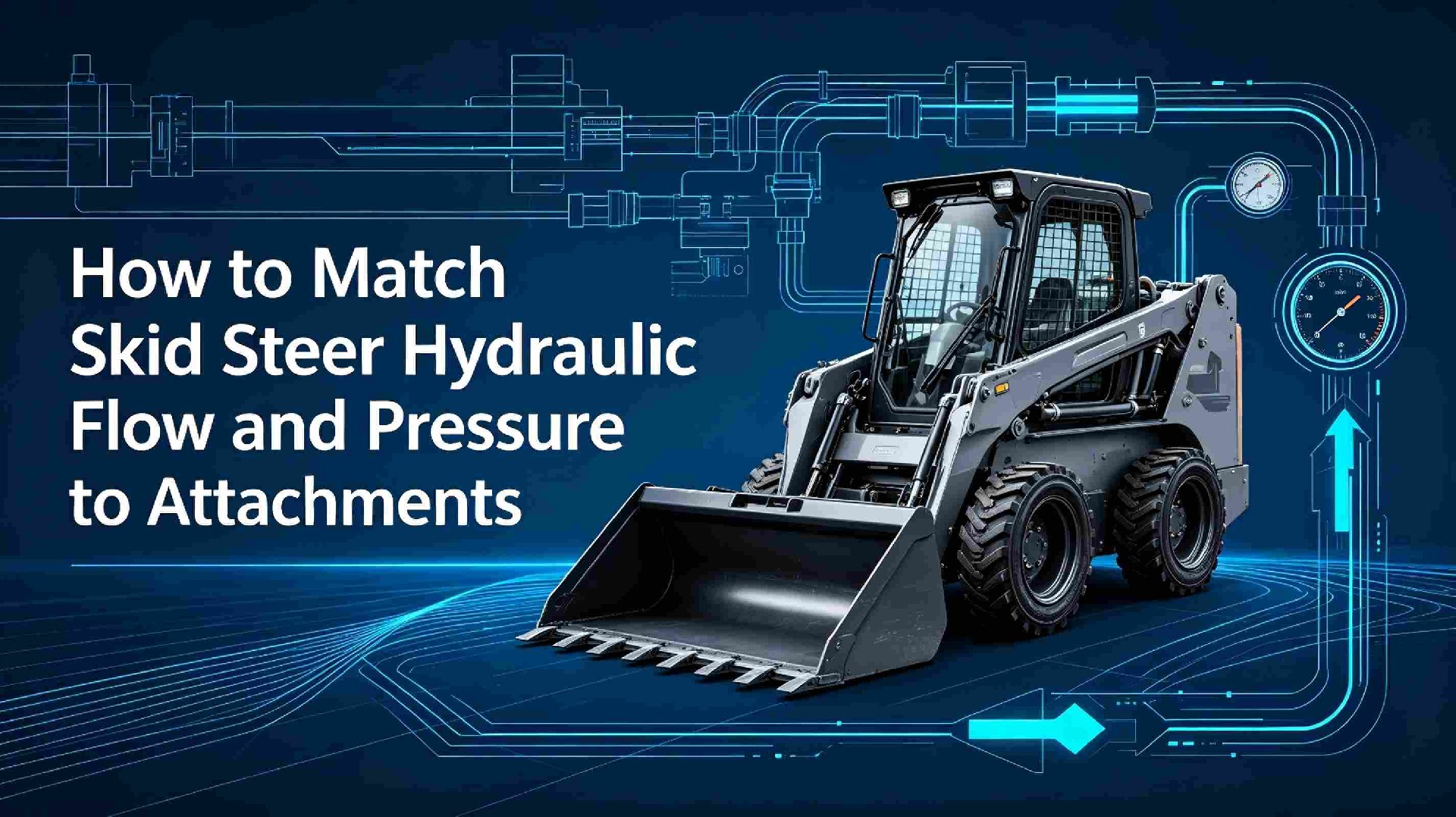
Choosing a skid steer attachment is not simply a matter of selecting the right working width or attachment size. One of the most important compatibility checks is the hydraulic system.
A skid steer loader can physically connect to an attachment through a quick-attach system and still be a poor match if its auxiliary hydraulic flow or pressure does not meet the attachment's requirements.
For contractors, equipment dealers, rental fleets, municipal operators and machinery procurement teams, understanding hydraulic flow and pressure before purchasing an attachment can prevent compatibility problems, poor performance and unnecessary downtime.
HCN Attachments manufactures a broad range of skid steer and loader attachments, including cold planers, forestry mulchers, snow blowers, vibratory rollers, breakers, dozer blades, boom mowers and other hydraulic tools. The published specifications across these products show why hydraulic matching needs to be evaluated on a model-by-model basis.
This guide explains how to check hydraulic compatibility and how to approach attachment selection before requesting a quotation.
Why Hydraulic Matching Matters
Most hydraulic skid steer attachments use the auxiliary hydraulic system of the host machine to drive a hydraulic motor, cylinder or other working mechanism.
The attachment therefore depends on two basic hydraulic characteristics:
Hydraulic flow, normally expressed in L/min or GPM
Hydraulic pressure, normally expressed in MPa, bar or psi
Flow is closely related to the operating speed and available hydraulic power of a motor-driven attachment, while pressure is related to the force or torque that the hydraulic system can develop.
However, a higher number is not automatically better.
An attachment designed for a particular flow range should be operated within that range. Supplying a hydraulic motor with substantially more flow than specified can create excessive speed, heat or component stress. Supplying too little flow can reduce operating speed and productivity.
Pressure also needs to be controlled within the attachment's specified working range.
For this reason, buyers should compare the loader's actual auxiliary hydraulic specifications with the attachment manufacturer's requirements before purchasing.
Hydraulic Flow vs. Hydraulic Pressure: What Is the Difference?
These two specifications are often confused, but they perform different functions.
Hydraulic Flow
Hydraulic flow describes the amount of hydraulic fluid delivered over time.
It is commonly shown as:
L/min
or:
GPM
Flow has a major influence on the rotational speed of hydraulic motors.
For example, HCN's 0205 Vibratory Roller models specify a working flow of 60–70 L/min, while the 0206 Series Cold Planer requires considerably more hydraulic flow depending on the model. The 020612 requires 120–130 L/min, while the 020618 and 020620 require 130–140 L/min.
Hydraulic Pressure
Pressure is normally specified in MPa, bar or psi.
It represents the pressure available to operate the hydraulic circuit and is especially important for hydraulic motors and high-force attachments.
For example, the HCN 0206 Series Cold Planer lists an operating pressure of 21 MPa, while the 0205 Vibratory Roller specifies 20 MPa. The 0309 Series Dozer Blade also lists a maximum allowable pressure of 21 MPa.
The correct approach is therefore not to ask whether a skid steer is simply "high hydraulic flow."
The more useful question is: Does the machine's actual auxiliary hydraulic flow and pressure fall within the attachment manufacturer's specified operating range?
Step 1: Check the Skid Steer's Auxiliary Hydraulic Specifications
Before selecting an attachment, obtain the hydraulic specifications for the exact skid steer model.
Do not rely only on the loader's engine horsepower.
Two machines with similar engine power can have different auxiliary hydraulic configurations.
The information you should obtain includes:
Auxiliary hydraulic flow
Maximum auxiliary pressure
Standard-flow or high-flow configuration
Auxiliary circuit type
Electrical control requirements
Quick-attach configuration
Rated operating capacity
Attachment weight limitations
For fleet purchasing, it is particularly important to record these specifications for every machine rather than assuming that one specification applies to an entire fleet.
Step 2: Compare the Attachment's Required Flow
The attachment specification should be treated as a compatibility range rather than a general recommendation.
HCN's current product pages demonstrate how widely requirements can vary.
| HCN Attachment | Published Hydraulic Flow | Published Pressure |
|---|---|---|
| 0205 Vibratory Roller | 60–70 L/min | 20 MPa |
| 0209H Snow Blower | 75–150 L/min | 20 MPa |
| 0513 Forestry Mulcher | 110–150 L/min depending on model | 21 MPa |
| 0206 Cold Planer | 120–140 L/min for listed models | 21 MPa |
| 0203 Breaker Hammer | 25–65 L/min depending on model | Model dependent |
| 0309 Dozer Blade | 20–30 L/min | 21 MPa |
| 052840 Boom Mower | 75–100 L/min | 21 MPa |
These figures are taken from the corresponding HCN product specifications and should not be generalized across an entire product family. Different models can have different hydraulic requirements.
Always match the exact attachment model with the exact host-machine hydraulic specification.
Step 3: Understand Standard-Flow and High-Flow Attachments
Some hydraulic attachments require substantially more flow than conventional auxiliary circuits can provide.
This is particularly relevant for high-production attachments such as forestry mulchers and cold planers.
For example, HCN's 0513 Series Forestry Mulcher is designed for high-flow skid steers. Its listed models require between 110 and 150 L/min depending on model and specify 21 MPa operating pressure.
The 0206 Cold Planer range also illustrates the difference between models. The 020612, 020618 and 020620 models list flow requirements of 120–130 L/min or 130–140 L/min. Other 0206 configurations have different requirements.
Therefore, the phrase "high-flow attachment" is not enough information for procurement.
The buyer should confirm:
Exact attachment model
Required flow range
Required operating pressure
Host machine's actual auxiliary flow
Host machine's maximum auxiliary pressure
Whether additional electrical controls are required
Step 4: Do Not Assume More Hydraulic Flow Is Always Better
A common purchasing mistake is to assume that a high-flow skid steer will automatically operate every hydraulic attachment more effectively.
That is not necessarily true.
Hydraulic motors are designed around specific operating conditions. Excessive flow can increase motor speed beyond the intended operating range, potentially increasing heat generation and component stress.
On the other hand, insufficient flow may cause the attachment to operate slowly and reduce productivity.
The objective is therefore not to maximize hydraulic flow.
The objective is to match the machine and attachment correctly.
This becomes particularly important when a contractor operates multiple attachments from the same skid steer.
Step 5: Check Hydraulic Pressure Separately
Flow and pressure should always be checked independently.
For example, the HCN 0209H Snow Blower lists a hydraulic flow range of 75–150 L/min and a maximum allowable pressure of 20 MPa.
The HCN 0309 Series Dozer Blade, by comparison, lists a much lower working-flow requirement of 20–30 L/min while allowing up to 21 MPa.
This illustrates why attachment selection cannot be based on pressure alone.
A machine may have sufficient pressure but inadequate flow.
Another machine may provide sufficient flow but have an unsuitable pressure configuration.
Both values need to be checked.
Examples from HCN's Attachment Range
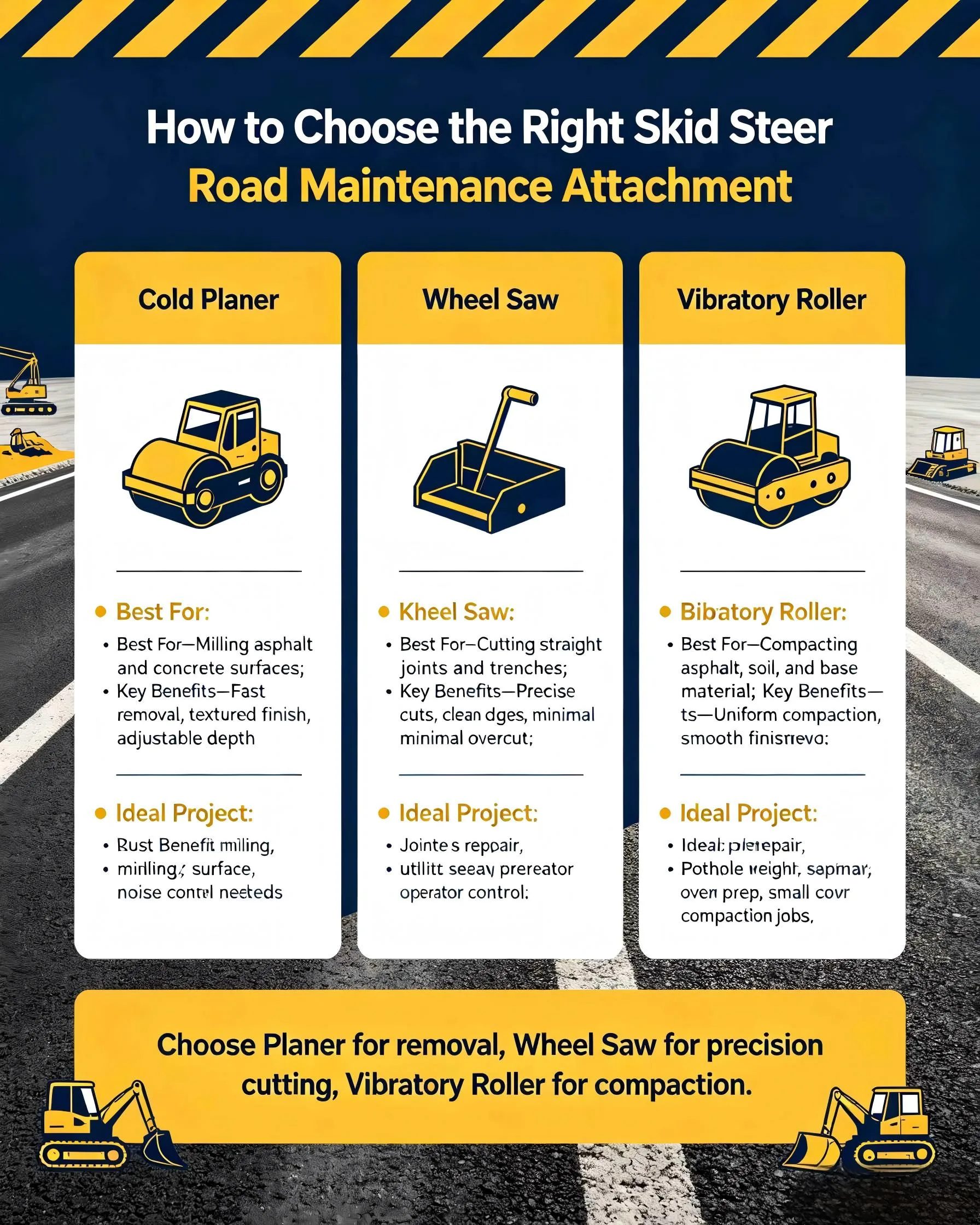
Cold Planer: A High-Flow Road Maintenance Application
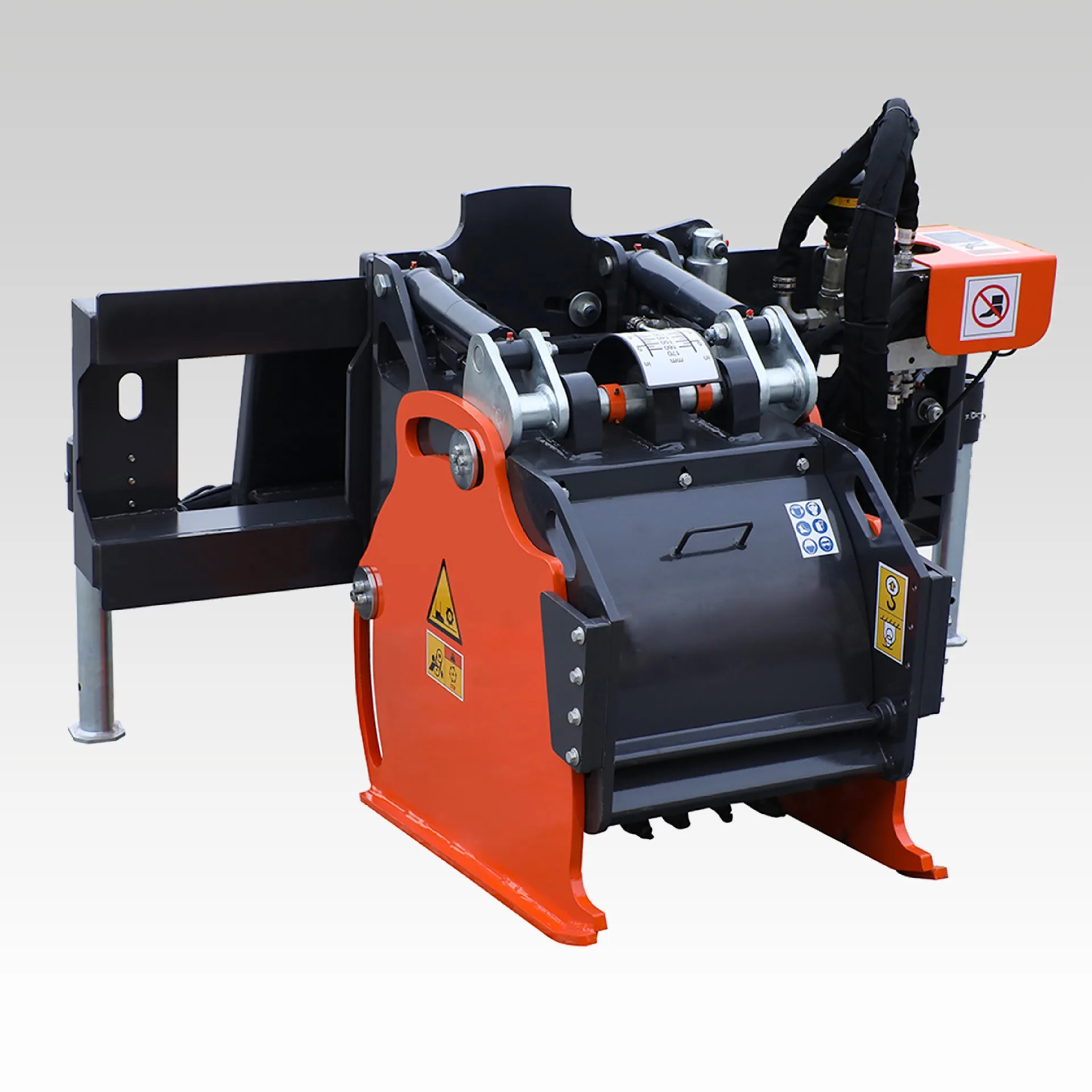
The 0206 Series Cold Planer is intended for applications including asphalt and concrete repair, pavement milling, curb cutting, lane-stripe removal and work around manholes.
The 020612 model has a 300 mm working width and 150 mm working depth, with a published flow requirement of 120–130 L/min.
The 020618 and 020620 models have working widths of 450 mm and 500 mm respectively, with 130–140 L/min hydraulic flow requirements. The listed models specify 21 MPa pressure.
This makes hydraulic compatibility a critical consideration when choosing a cold planer for road maintenance work.
A contractor should not select a planer solely because its cutting width matches the job.
The host machine must also supply the required hydraulic performance.
Forestry Mulcher: Matching Flow to Production Requirements
The 0513 Series Forestry Mulcher is designed for high-flow skid steers and is intended for vegetation, brush and tree-clearing applications.
The published HCN specifications show models with working-flow requirements ranging from 110 to 150 L/min and operating pressure of 21 MPa.
For forestry contractors, hydraulic compatibility should therefore be evaluated alongside:
Loader lifting capacity
Attachment weight
Hydraulic flow
Hydraulic pressure
Working width
Material size
Cooling requirements
Intended production rate
The HCN product information also identifies an independent cooling system and radiator for the forestry mulcher, reinforcing the importance of considering hydraulic heat management in demanding applications.
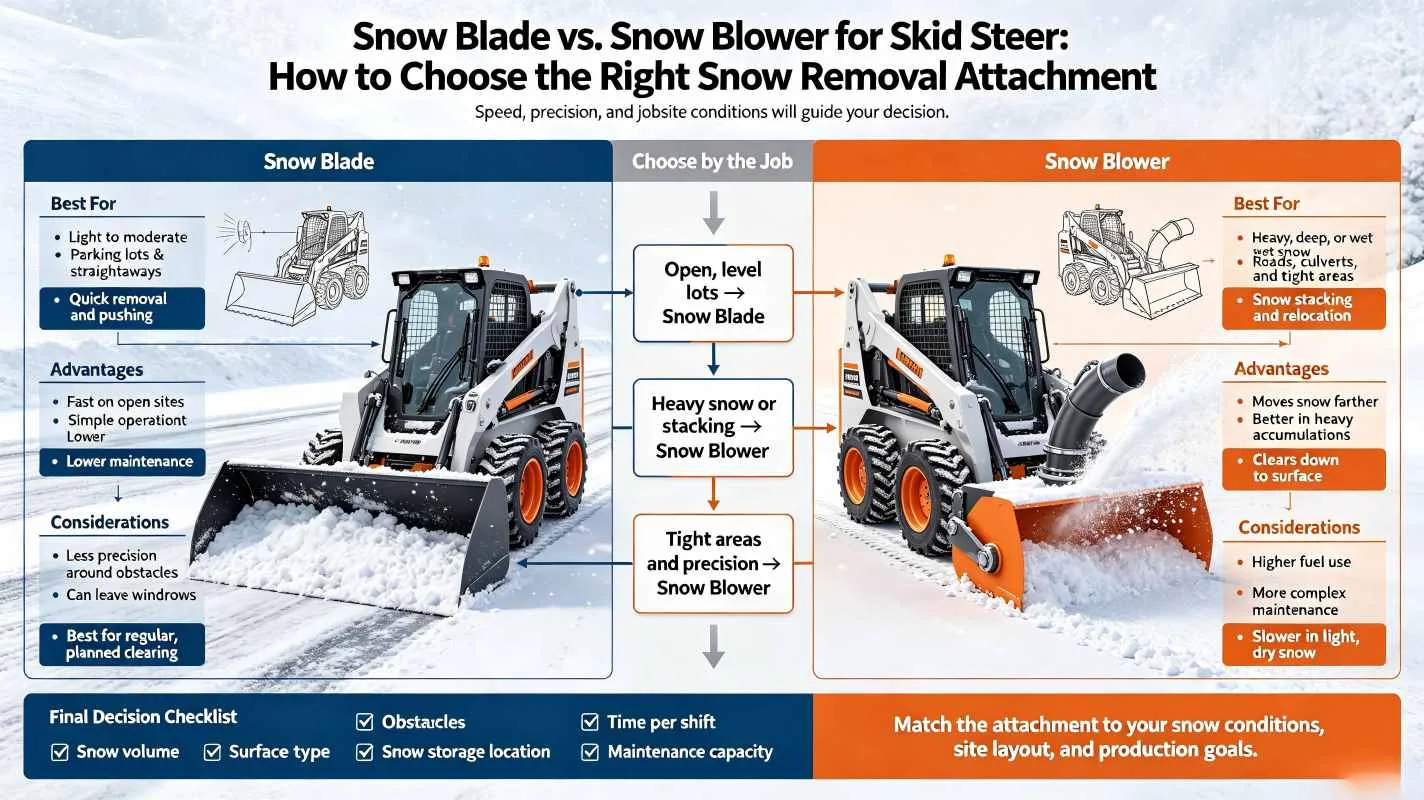
Snow Blower: A Wide Hydraulic Operating Range
The HCN 0209H Snow Blower lists a hydraulic flow range of 75–150 L/min and maximum allowable pressure of 20 MPa.
The listed models have operating widths of approximately 1,896 mm to 2,200 mm, with hydraulic flow requirements listed at 75–150 L/min.
For winter-maintenance fleets, hydraulic compatibility should therefore be confirmed before assigning a snow blower to a particular skid steer.
The electrical control configuration should also be checked because HCN specifies that an electric control option must be selected and matched to the skid steer make and model.
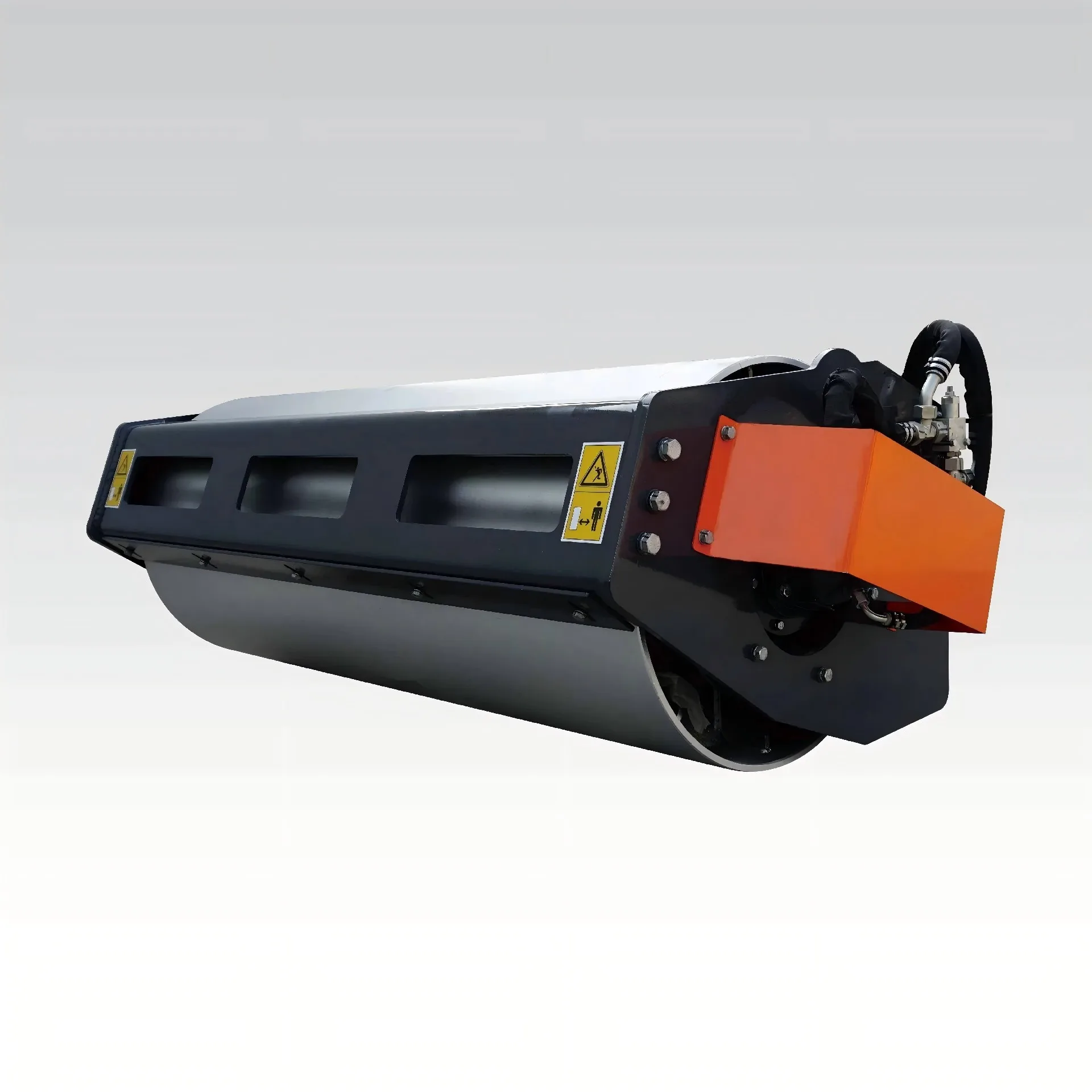
Vibratory Roller: Lower Flow Than Many High-Flow Tools
The 0205 Vibratory Roller demonstrates that not every hydraulic attachment requires a high-flow circuit.
HCN lists 60–70 L/min working flow and 20 MPa working pressure for the listed models.
For contractors working across several applications, this type of attachment can therefore be evaluated separately from high-flow forestry and milling tools when planning fleet utilization.
Hydraulic Flow Is Not the Only Compatibility Check
Even when hydraulic specifications match, the attachment may not be suitable for a machine.
A complete compatibility assessment should include at least five areas.
1. Hydraulic Compatibility
Check:
Flow
Pressure
Auxiliary circuit
Hydraulic motor requirements
Electrical controls
2. Machine Capacity
Check:
Rated operating capacity
Lift capacity
Tipping load
Attachment weight
Machine balance
An attachment that can be hydraulically powered may still be unsuitable if its weight or operating loads exceed the host machine's capabilities.
3. Mounting Compatibility
Confirm that the attachment uses the correct quick-attach or mounting configuration.
The HCN product range includes attachments designed for skid steer loaders, compact loaders, small wheel loaders and other host machines. The appropriate mounting arrangement should therefore be confirmed for the exact machine.
4. Electrical Compatibility
Some attachments require electrical controls in addition to hydraulic connections.
This is particularly relevant to the HCN 0209H Snow Blower, where the electric control option needs to be matched to the skid steer make and model.
5. Application Compatibility
Finally, consider the actual work.
A contractor repairing asphalt may need a cold planer.
A forestry contractor may need a forestry mulcher.
A municipality may need snow-removal equipment or a boom mower.
A landscaping contractor may prioritize grading, material handling or vegetation maintenance.
The right attachment is the one that matches both the machine and the application.
A Practical Attachment Selection Workflow
For equipment dealers, contractors and procurement teams, the following process can make attachment selection more reliable.
Step 1: Identify the Host Machine
Make
Model
Engine power
Rated operating capacity
Auxiliary hydraulic flow
Auxiliary hydraulic pressure
Quick-attach type
Step 2: Define the Application
Material
Working environment
Required working width
Required working depth
Expected production rate
Operating frequency
Seasonal or year-round use
Step 3: Shortlist Attachments
Compare suitable attachment categories rather than immediately selecting a model.
Road maintenance: cold planer, vibratory roller, dozer blade and manhole saw.
Forestry: forestry mulcher, grapple and boom mower.
Snow removal: snow blade and snow blower.
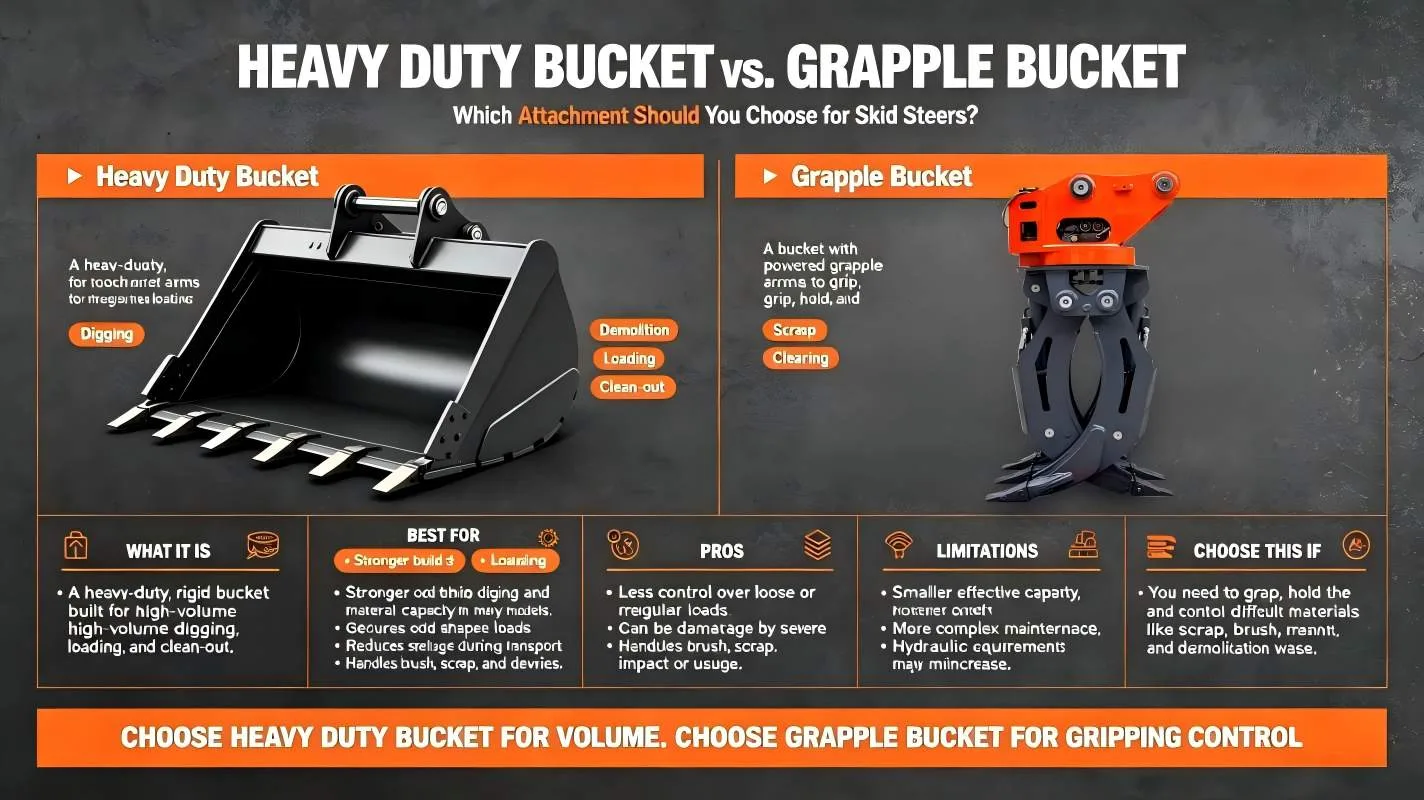
Material handling: pallet fork, grapple bucket and heavy-duty bucket.
Step 4: Check Exact Hydraulic Requirements
Compare the attachment's published flow and pressure with the host machine.
Do not substitute specifications from another model.
Step 5: Confirm Weight and Mounting
Make sure the machine can safely carry and operate the attachment.
Step 6: Confirm Controls and Accessories
Hydraulic hoses
Couplers
Electrical connections
Control kits
Optional water systems
Cutting tools
Wear components
Step 7: Request a Model-Specific Compatibility Check
If the machine specifications or attachment configuration are unclear, provide the machine model and intended application to HCN before ordering.
What Information Should You Send to an Attachment Manufacturer?
For a faster quotation, prepare the following information:
Skid steer make and model
Standard-flow or high-flow configuration
Auxiliary hydraulic flow
Auxiliary hydraulic pressure
Rated operating capacity
Quick-attach type
Intended application
Required attachment width
Expected operating conditions
Quantity required
Destination market
If the exact hydraulic specification is unavailable, ask the machine dealer or manufacturer for the auxiliary hydraulic data rather than estimating it.
This is especially important for attachments with high hydraulic-flow requirements.
For project-specific requirements, you can also contact HCN and provide the machine model, hydraulic specifications and intended application for further attachment selection support.
Hydraulic Compatibility Checklist
☐ Exact host-machine model identified
☐ Auxiliary hydraulic flow confirmed
☐ Auxiliary hydraulic pressure confirmed
☐ Standard-flow or high-flow configuration confirmed
☐ Attachment model identified
☐ Attachment flow requirement checked
☐ Attachment pressure requirement checked
☐ Attachment weight checked
☐ Rated machine capacity checked
☐ Quick-attach compatibility checked
☐ Electrical control requirements checked
☐ Hydraulic couplers checked
☐ Intended application confirmed
☐ Optional equipment requirements confirmed
☐ Final compatibility confirmed with the supplier
Frequently Asked Questions
1. How do I know if a skid steer attachment will fit my machine?
Physical mounting is only one part of compatibility. Check the quick-attach system, hydraulic flow, hydraulic pressure, attachment weight, machine capacity and any electrical control requirements.
2. Is high-flow always better for skid steer attachments?
No. The attachment should operate within its specified hydraulic range. Excessive flow can be unsuitable for some hydraulic motors, while insufficient flow can reduce operating performance.
3. What is more important, hydraulic flow or pressure?
Both matter, but they affect the hydraulic system differently. Flow is particularly important for hydraulic motor speed, while pressure is associated with available hydraulic force and torque. The correct attachment must meet both requirements.
4. Can one skid steer operate every HCN attachment?
Not necessarily. HCN's attachment range includes products with substantially different hydraulic requirements. For example, the 0309 Series Dozer Blade requires 20–30 L/min, while selected 0206 Cold Planer models require 120–140 L/min.
5. What hydraulic flow does a cold planer require?
HCN's 020612, 020618 and 020620 Cold Planer models list different hydraulic flow requirements within approximately the 120–140 L/min range. Other 0206 configurations may have different requirements, so the exact model should always be checked.
6. What hydraulic flow does a forestry mulcher require?
The HCN 0513 Series Forestry Mulcher models listed on the product page require between 110 and 150 L/min depending on the model, with 21 MPa operating pressure.
7. What hydraulic flow does the HCN snow blower require?
The 0209H Snow Blower page lists 75–150 L/min hydraulic flow and a maximum allowable pressure of 20 MPa for the listed models.
8. What information should I provide when requesting an attachment quotation?
Provide the exact machine make and model, auxiliary hydraulic flow and pressure, quick-attach configuration, intended application, required attachment size and quantity. If you are uncertain about any specification, ask HCN to confirm compatibility before ordering.
Conclusion
Hydraulic compatibility should be one of the first checks when selecting a skid steer attachment—not something considered after the attachment has already been chosen.
HCN's current product range demonstrates why. A 0309 Series Dozer Blade requires 20–30 L/min, the 0205 Vibratory Roller requires 60–70 L/min, the 0209H Snow Blower operates within a 75–150 L/min range, and selected Forestry Mulcher and Cold Planer models require more than 110 L/min.
For contractors and equipment buyers, the safest procurement process is straightforward:
Identify the machine → confirm hydraulic flow and pressure → define the application → select the attachment → verify mounting and machine capacity → confirm the exact model with the supplier.
When specifications are not clearly available for a particular machine or attachment configuration, do not estimate. Contact HCN with the machine model and application requirements so the correct configuration can be confirmed before purchase.
 +86 185 5285 3111
 +86 185 5285 3111
 nancy@hcn-tech.com
