




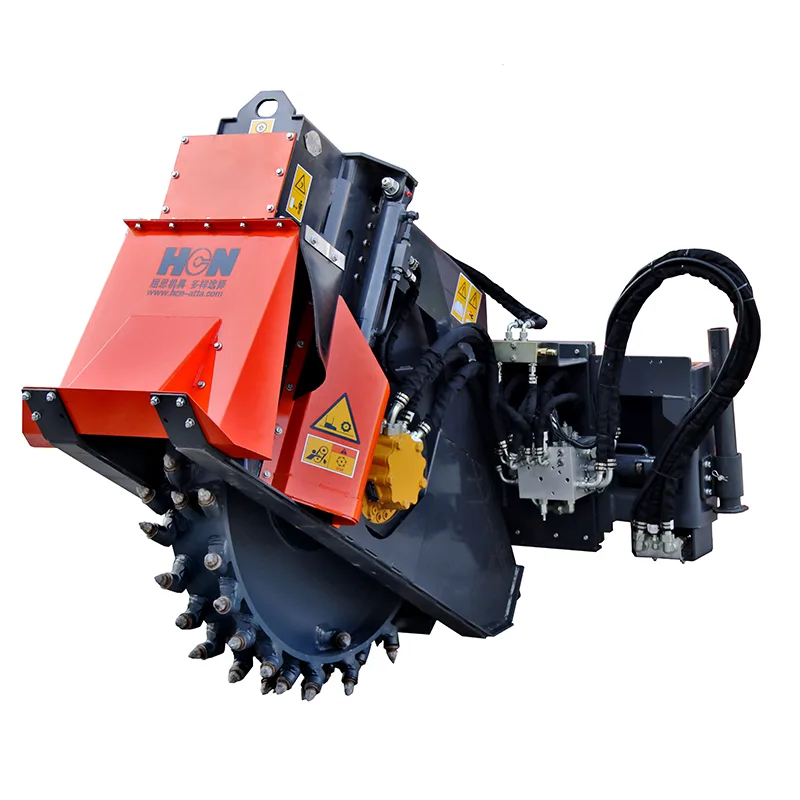
Skid Steer Wheel Saw Attachment: Precision Trenching for Asphalt, Concrete & Utility Installation
For contractors and municipal crews tackling road repairs, utility line installation, or precision trenching in hard surfaces, the skid steer wheel saw attachment has become an indispensable tool. Unlike bulky walk-behind saws or costly specialty machines, a hydraulic wheel saw mounts directly to your skid steer loader — leveraging its mobility and high-flow hydraulic power for rapid, accurate cuts through asphalt, concrete, frozen ground, and rocky soils.
HCN Attachments Manufacture (hcn-tech.com) offers a complete range of wheel saw attachments engineered for demanding trenching and pavement repair applications. With hydraulic depth control, side-shift capability, and integrated trench cleaning, these attachments are built to maximize productivity on every job site.
What Is a Skid Steer Wheel Saw?
A skid steer wheel saw — also referred to as a pavement saw, road saw, or rock saw attachment — uses a large-diameter carbide-tipped cutting wheel driven by a high-torque hydraulic motor. The wheel cuts a narrow, precise trench while excavated material (spoil) is discharged through side openings, leaving a clean channel ready for pipe, cable, or utility placement.
HCN's wheel saw attachments are specifically designed for high-flow skid steer loaders and are capable of cutting through:
Asphalt — for road patching, expansion joint cuts, and pavement repair
Concrete — including reinforced surfaces
Frozen ground — essential for winter construction projects
Hard soils containing gravel and rock — ideal for utility trenching in challenging conditions
Key Features That Set HCN Wheel Saws Apart
⚙️ Direct Drive Hydraulic System Hydraulic piston pump motor ensures maximum cutting rate and wheel torque for optimal production performance and efficiency.
↔️ Hydraulic Side-Shift (Standard) Position the wheel from center to far right — ideal for cutting close to curbs, walls, and obstructions without repositioning the machine.
📏 Hydraulic Depth Control (Standard) Adjust cut depth on the fly from the operator's compartment to quickly adapt to changing job requirements.
🧹 Integrated Trench Cleaning Device Hydraulically operated blade removes spoil and ensures a clean, debris-free trench bottom.
🔄 Adjustable Spoil Discharge Deflector plates allow spoil to be discharged left, right, or both sides using included blanking plates.
🎯 Optional Guide Bar Improves visibility of the cut path for straighter, more accurate trenching.
Technical Specifications
| Model | Trenching Width (mm) | Trenching Depth (mm) | Weight (kg) | Flow Requirement (L/min) | Working Pressure (MPa) |
|---|---|---|---|---|---|
| 030508I | 30 | 350 | 400 | 40–80 | 21 |
| 030512I | 50 | 350–450 | 600 | 60–120 | |
| 030512IA | 80 | 450–600 | 700 | 60–120 | |
| 030516I | 100 | 450–600 | 1100 | 90–150 |
All models feature a 650 mm side-shift distance and optional 12V/24V working voltage. Trench cleaning devices available as optional or standard depending on model.
Industry Trends: Why Wheel Saws Are Gaining Traction
The global trencher attachment market is projected to reach an estimated $0.6 billion by 2030, with a compound annual growth rate (CAGR) of 4.5% from 2024 to 2030. This growth is driven by increased infrastructure development, expanding utility networks, and the accelerating deployment of fiber-optic broadband — all of which demand precise, narrow-trenching solutions.
Major manufacturers are actively expanding their wheel saw offerings. In 2026 alone:
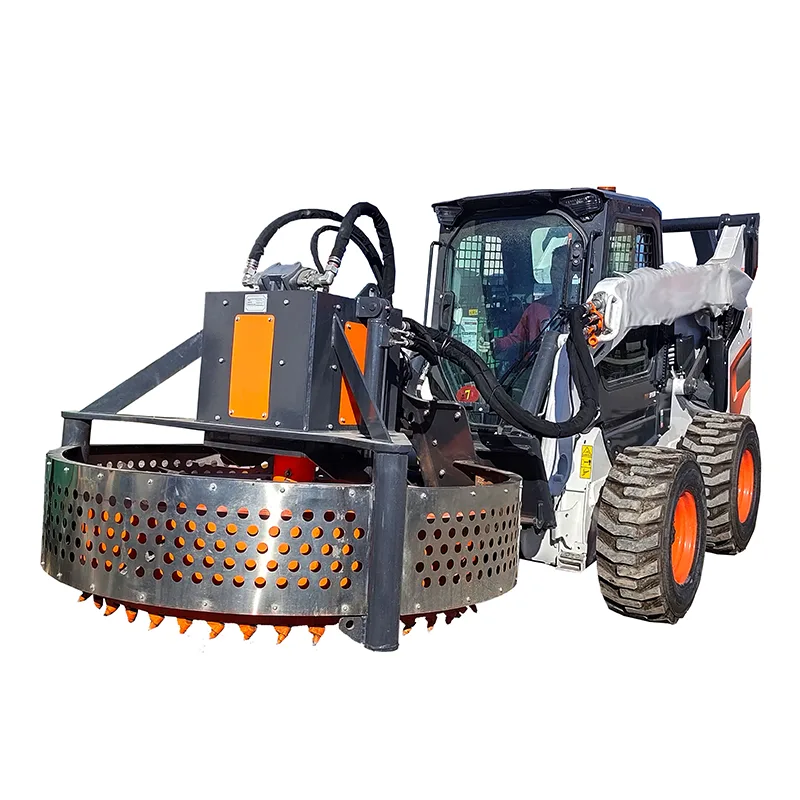
Simex launched two new wheel saws for mini and micro-trenching, designed for skid steer loaders to operate on asphalt, concrete, and rock.
FAE introduced the RWL/SSL wheel saw for 50–75 hp skid steers, capable of cutting channels up to 14 inches deep for utility lines.
Bobcat unveiled the WS-SL20 wheel saw with variable segment design, allowing operators to change cutting width (50–120 mm) in the field — saving up to 10 hours of workshop time.
These industry moves confirm that wheel saw attachments are no longer niche tools — they are becoming standard equipment for contractors who demand precision, speed, and versatility in trenching and pavement work.
Primary Applications
HCN wheel saw attachments are engineered for a wide range of job site applications:
🥇 Utility Line Installation — Trenching for electric, water, gas, and fiber-optic cables
🛣️ Road Maintenance & Pavement Repair — Asphalt patch cutting and expansion joint preparation
🏗️ Municipal Construction — Drain pipe installation and infrastructure projects
❄️ Cold-Weather Construction — Cutting through frozen ground when other methods fail
🏠 Residential & Commercial Site Work — Precision trenching with minimal surface disruption
Wheel Saw vs. Traditional Methods
Compared to pneumatic or hydraulic breakers, a skid steer wheel saw delivers:
Greater precision — clean, straight cuts with minimal overbreak
Faster production — continuous cutting vs. impact-based chipping
Less site disruption — narrow kerf reduces material removal and backfill requirements
Improved safety — operators maintain a safe distance from the cutting area
Unlike dedicated trenching machines, a wheel saw attachment is easier to transport and can be quickly swapped with other skid steer tools — maximizing equipment utilization on multi-purpose job sites.
Frequently Asked Questions (FAQ)
❓ What materials can a skid steer wheel saw cut through?
A hydraulic wheel saw attachment can cut through asphalt, concrete (including reinforced), frozen ground, hard soils containing gravel, and rocky surfaces. The carbide-tipped cutting wheel is designed for high-performance trenching in dense materials.
❓ What hydraulic flow is required for a wheel saw attachment?
HCN wheel saw models require hydraulic flow ranging from 40 to 150 L/min depending on the model, with working pressure of 21 MPa. High-flow skid steer loaders are recommended for optimal performance.
❓ How does hydraulic side-shift improve job site efficiency?
Hydraulic side-shift allows the operator to position the cutting wheel from center to far right without repositioning the entire machine. This is especially valuable when cutting close to curbs, walls, and other obstructions.
❓ Can I adjust the cutting depth while operating?
Yes. HCN wheel saws feature standard hydraulic depth control operated from the cab, allowing the operator to adjust cut depth on the fly to match changing job conditions.
❓ What is the trench cleaning device and why is it important?
The trench cleaning device is a hydraulically operated blade that removes spoil from the trench bottom, ensuring a clean, ready-to-use channel for pipe or cable installation. This eliminates secondary cleanup operations and speeds project completion.
❓ Which skid steer loaders are compatible with HCN wheel saws?
HCN wheel saws are designed for skid steer loaders with high hydraulic flow. They are compatible with most major brands including Cat, Bobcat, Kubota, and others using standard quick-attach plates.
❓ How does a wheel saw compare to a trencher or concrete saw?
A wheel saw offers greater precision than pneumatic breakers and is more portable than dedicated trenching machines. Unlike walk-behind concrete saws, a skid steer-mounted wheel saw leverages the carrier's mobility and hydraulic power for faster, more versatile operation.
🔧 Ready to upgrade your trenching capabilities?
Explore the full range of HCN wheel saw attachments for skid steer loaders.
👉 View Product Details & Specifications →
About HCN Attachments Manufacture — HCN-TECH is a leading manufacturer of skid steer and wheel loader attachments, including wheel saws, rock saws, trenchers, and more. With a commitment to quality, durability, and innovation, HCN serves contractors and municipalities worldwide.
 +86 185 5285 3111
 +86 185 5285 3111
 nancy@hcn-tech.com
