




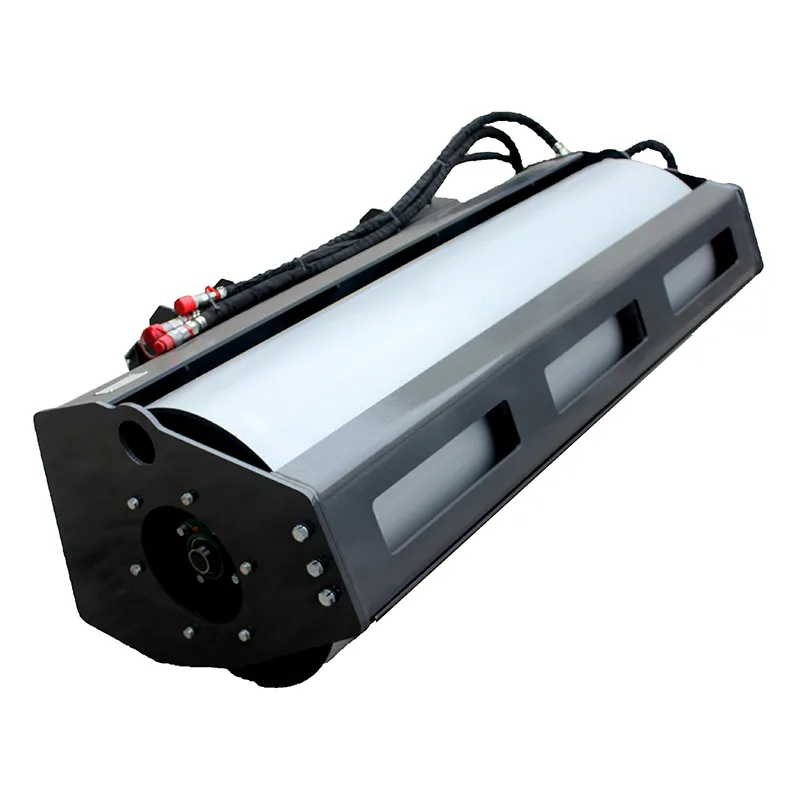
How to Choose a Skid Steer Vibratory Roller for Compaction Jobs
A skid steer vibratory roller can turn a compact loader into a versatile compaction machine for road construction, landscaping, utility restoration, parking lot work and other applications where a conventional roller may be difficult to transport or maneuver. However, selecting the right attachment requires more than comparing roller dimensions or dynamic force.
Hydraulic flow, operating pressure, carrier capacity, material type, layer thickness, working width and jobsite access all influence compaction performance. Contractors also need to consider how the attachment will fit into the overall workflow of the project and whether the host machine can operate it within the manufacturer's recommended range.
For companies that already own skid steers or compact loaders, a vibratory roller attachment can provide another way to increase equipment utilization without adding a dedicated compaction machine to every job. HCN's 0205 Vibratory Roller is designed for skid loaders and small wheel loaders and is listed for applications including roadways, walkways, bike paths, golf courses, bridges, parking lots and landscaping work.
What Does a Skid Steer Vibratory Roller Do?
A vibratory roller attachment combines the mobility of a compact loader with the compaction action of a vibrating drum. Instead of simply applying static weight to the surface, the roller uses hydraulic power to generate vibration through its exciter system.
This dynamic action helps rearrange particles within suitable granular materials and can increase material density when the operating conditions are appropriate. The effectiveness of the process depends on factors such as material composition, moisture content, layer thickness, travel speed and the number of passes.
That distinction is important for contractors. A vibratory roller is not a substitute for proper grading, material preparation or moisture control. It is one part of a larger compaction process.
When Does a Vibratory Roller Attachment Make Sense?
Small Road Construction Projects
Small road construction and repair projects often require several types of equipment during a single workday. A skid steer may be used to move aggregate, prepare the work area and perform grading before compaction begins.
Using an attachment-based roller allows the same carrier to remain on the jobsite while the operator changes tools according to the work sequence. This can be particularly useful for contractors handling smaller road sections, access roads or localized repairs.
Walkways and Bike Paths
Walkways and bike paths can present different equipment requirements from large road projects. Access may be limited, working areas may be narrow and the contractor may need to maneuver around existing landscaping or structures.
A compact loader equipped with a suitable vibratory roller can provide a practical solution for preparing aggregate bases and compacting suitable surface materials in these environments.
Parking Lot Construction and Repair
Parking lots commonly involve grading, aggregate placement and compaction before the final surface is installed. Contractors using skid steers for material handling can benefit from having a compaction attachment available for smaller areas and repair projects.
The key is to match the attachment to the carrier's hydraulic and operating capabilities rather than assuming that every skid steer can run every roller attachment.
Hydraulic Flow Is a Critical Selection Factor
One of the first specifications contractors should check is auxiliary hydraulic flow.
HCN lists a working hydraulic flow of 60–70 L/min for the 0205 Vibratory Roller, together with a working pressure of 20 MPa. These figures should be compared with the actual auxiliary hydraulic specifications of the intended skid steer or small wheel loader before the attachment is purchased.
If hydraulic flow is below the required range, the attachment may not achieve its intended operating performance. If the hydraulic system supplies more flow than the attachment is designed to handle, the system may also require appropriate flow control to prevent excessive heat or component stress.
Contractors should therefore check the carrier manufacturer's specifications rather than relying only on the machine's model name or general horsepower rating.
How Material Type Changes the Compaction Process
Granular Aggregate
Granular aggregate is commonly used as a base or sub-base material for roads, parking areas, paths and other construction surfaces. Vibratory action can help consolidate particles and reduce voids when the material is placed in suitable layers.
However, the roller should not be expected to compensate for poor aggregate grading or excessively thick lifts. Proper material placement remains essential.
Soil
Soil compaction is more dependent on material characteristics and moisture conditions. Granular soils and cohesive soils respond differently to vibration, and the optimum moisture condition can have a major influence on achievable density.
For professional earthwork, contractors should follow the project's specified compaction method and verify results using the appropriate field testing procedure where required.
Asphalt
Asphalt compaction introduces additional variables such as mix temperature, layer thickness, paving sequence and cooling rate. A vibratory roller may be suitable for certain asphalt applications, but operators must follow the paving specification and the recommendations associated with the asphalt mix.
Understanding Roller Weight and Dynamic Force
When comparing vibratory rollers, buyers often focus on dynamic force. It is an important specification, but it should not be evaluated independently.
HCN's 0205 Vibratory Roller is available in two listed configurations. The 020560 model has a listed weight of 890 kg and dynamic force of 31 kN, while the 020572 model is listed at 955 kg and 37 kN dynamic force.
Both models have a listed overall width of 980 mm and roller diameter of 590 mm. The two configurations provide contractors with different equipment characteristics while maintaining compatibility with the intended skid loader and small wheel loader applications.
Common Mistakes Contractors Should Avoid
- Ignoring hydraulic specifications: Always compare attachment flow and pressure requirements with the host machine.
- Compacting excessively thick layers: Dynamic force cannot compensate indefinitely for excessive lift thickness.
- Ignoring moisture: Soil and aggregate may require suitable moisture conditions to achieve effective compaction.
- Traveling too quickly: Excessive speed can reduce the amount of effective compaction energy applied to a given area.
- Using repeated passes without checking the cause of poor results: More passes do not necessarily solve problems caused by unsuitable material or preparation.
- Ignoring carrier stability: Attachment weight and jobsite conditions must be considered together.
HCN 0205 Vibratory Roller for Skid Loaders and Small Wheel Loaders
HCN's 0205 Vibratory Roller is specifically listed for skid loaders and small wheel loaders. The published specifications include a 60–70 L/min working flow, 20 MPa working pressure, 590 mm roller diameter and 980 mm overall width.
HCN lists the attachment for contractors, rental fleets and applications including roadways, walkways, bike paths, golf courses, bridges, parking lots and landscaping.
The product information also identifies a hydraulically powered exciter system and isolated drums designed to reduce vibration transmission to the frame. These features are relevant when evaluating an attachment for regular professional use.
How to Build an Efficient Compaction Workflow
Prepare the Surface First
Before rolling, the material should be graded and distributed according to the project requirements. A compactor should not be used as a substitute for basic grading and preparation.
Control Layer Thickness
Material should be placed in appropriate lifts. The required thickness depends on the material and project specification.
Establish a Consistent Pass Pattern
Operators should use a systematic pattern rather than repeatedly crossing the same areas without a defined procedure.
Verify Compaction
Where the project requires a specific density or compaction target, field testing should be used to verify results. Visual appearance alone cannot reliably confirm the required density.
What Should Contractors Check Before Buying?
- Auxiliary hydraulic flow
- Hydraulic operating pressure
- Carrier operating capacity
- Attachment weight
- Working width
- Material type
- Expected project size
- Jobsite access
- Maintenance requirements
- Availability of replacement components
Final Takeaway
A skid steer vibratory roller can be a valuable attachment for contractors who need compact and versatile compaction equipment. Its greatest advantage is not simply the ability to generate vibration, but the ability to integrate compaction into a multi-purpose loader workflow.
The right attachment should be selected according to the carrier's hydraulic system, operating capacity, project requirements and working environment. HCN's 0205 Vibratory Roller provides two configurations for skid loaders and small wheel loaders, with published specifications that allow buyers to evaluate hydraulic compatibility, weight, dynamic force and working dimensions before making a purchasing decision.
For contractors working on roadways, walkways, parking areas, landscaping projects and other compact construction sites, matching the roller to the carrier and the material is the foundation of an efficient compaction strategy.
Frequently Asked Questions
What is a skid steer vibratory roller?
A skid steer vibratory roller is a hydraulic attachment that uses a vibrating drum to compact suitable soil, aggregate and other construction materials.
What hydraulic flow does the HCN 0205 Vibratory Roller require?
The HCN 0205 Vibratory Roller is listed with a working hydraulic flow of 60–70 L/min and a working pressure of 20 MPa.
Can the HCN 0205 Vibratory Roller work with a small wheel loader?
Yes. HCN lists the 0205 Vibratory Roller for both skid loaders and small wheel loaders.
What projects are suitable for a skid steer roller attachment?
Applications can include roadways, walkways, bike paths, parking lots, landscaping projects and other construction areas where suitable compaction is required.
Is a vibratory roller suitable for asphalt?
It can be suitable for certain asphalt applications, but the correct procedure depends on the asphalt mix, temperature, layer thickness and project requirements.
How do I choose between different roller models?
Compare hydraulic compatibility, carrier capacity, attachment weight, dynamic force, working width, jobsite access and the type of material being compacted.
Can a vibratory roller replace a dedicated road roller?
Not for every project. Dedicated rollers can be more appropriate for large-scale continuous paving, while attachment-mounted rollers can be useful for smaller projects and multi-purpose equipment workflows.
Why is hydraulic compatibility important?
The roller relies on the carrier's auxiliary hydraulic system. Incorrect flow or pressure can affect performance and may cause unnecessary heat or component stress.
 +86 185 5285 3111
 +86 185 5285 3111
 nancy@hcn-tech.com
