




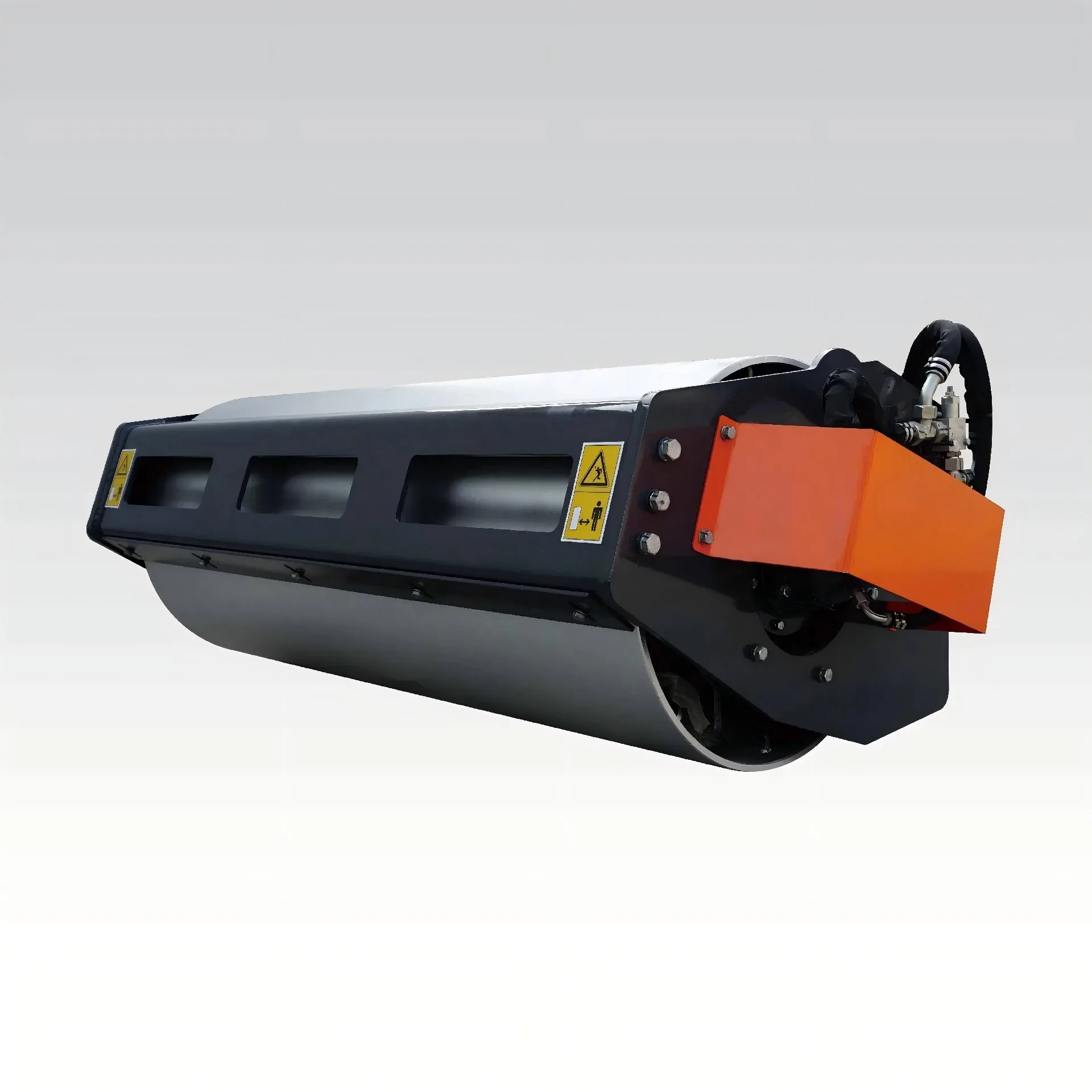
When a skid steer is being used for road repair, choosing the right attachment is not simply a question of machine size or hydraulic capacity. Two attachments may both be used on road projects while performing completely different jobs.
A cold planer removes existing pavement. A vibratory roller compacts material after it has been placed, graded, or repaired.
Understanding this difference is important for contractors, municipal operators, rental companies, equipment dealers, and fleet managers deciding which attachment to purchase or add to an existing skid steer fleet.
HCN Attachments offers both the 0206 Series Cold Planer and the 0205 Vibratory Roller, providing a useful real-world comparison between pavement-removal and compaction applications.
The key question is therefore not “Which attachment is better?” but:
Does the job require material removal, or does it require material compaction?
The answer determines which attachment makes sense.
Cold Planer vs. Vibratory Roller at a Glance
| Factor | HCN 0206 Series Cold Planer | HCN 0205 Vibratory Roller |
|---|---|---|
| Primary function | Milling and pavement removal | Compaction |
| Typical applications | Asphalt/concrete repair, potholes, frost heave repair, curb cutting, pavement texturing | Roads, paths, parking areas, landscaping, bridges and other compaction work |
| Working width | 300, 450 or 500 mm depending on model | 980 mm overall width |
| Published working depth | 150 mm | Not specified on the current product page |
| Hydraulic flow | 120–130 or 130–140 L/min depending on model | 60–70 L/min |
| Working pressure | 21 MPa | 20 MPa |
| Published weight | 580–980 kg depending on 0206 model | 890–955 kg |
| Hydraulic function | Powers the milling system | Powers the exciter system |
| Best suited to | Removing damaged or unwanted pavement | Compacting repaired or newly placed material |
The figures above are taken from HCN's current product information. Importantly, they should not be treated as interchangeable specifications: the two attachments perform different operations and have very different hydraulic requirements.
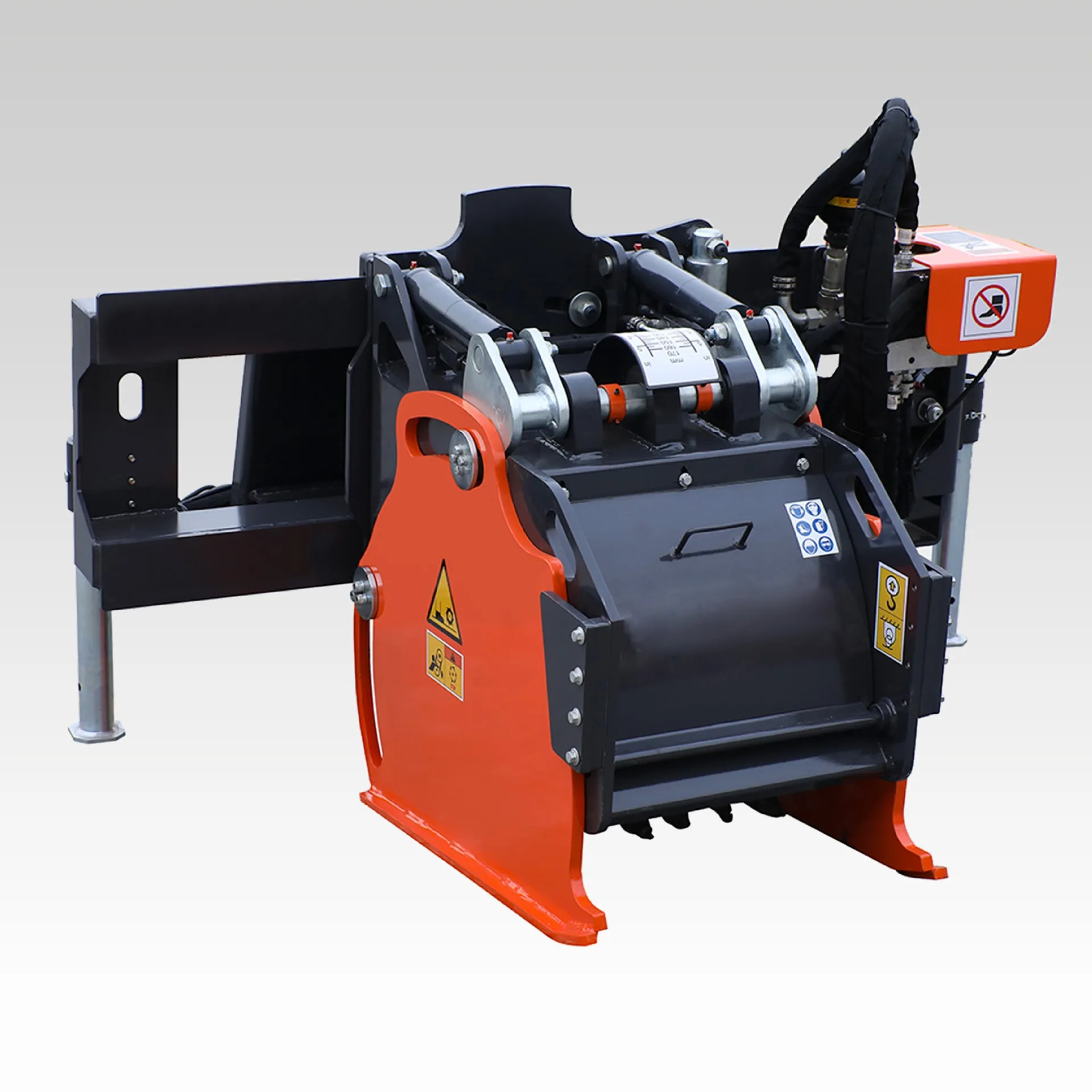
1. What Does a Cold Planer Do?
A cold planer is primarily a pavement-removal attachment.
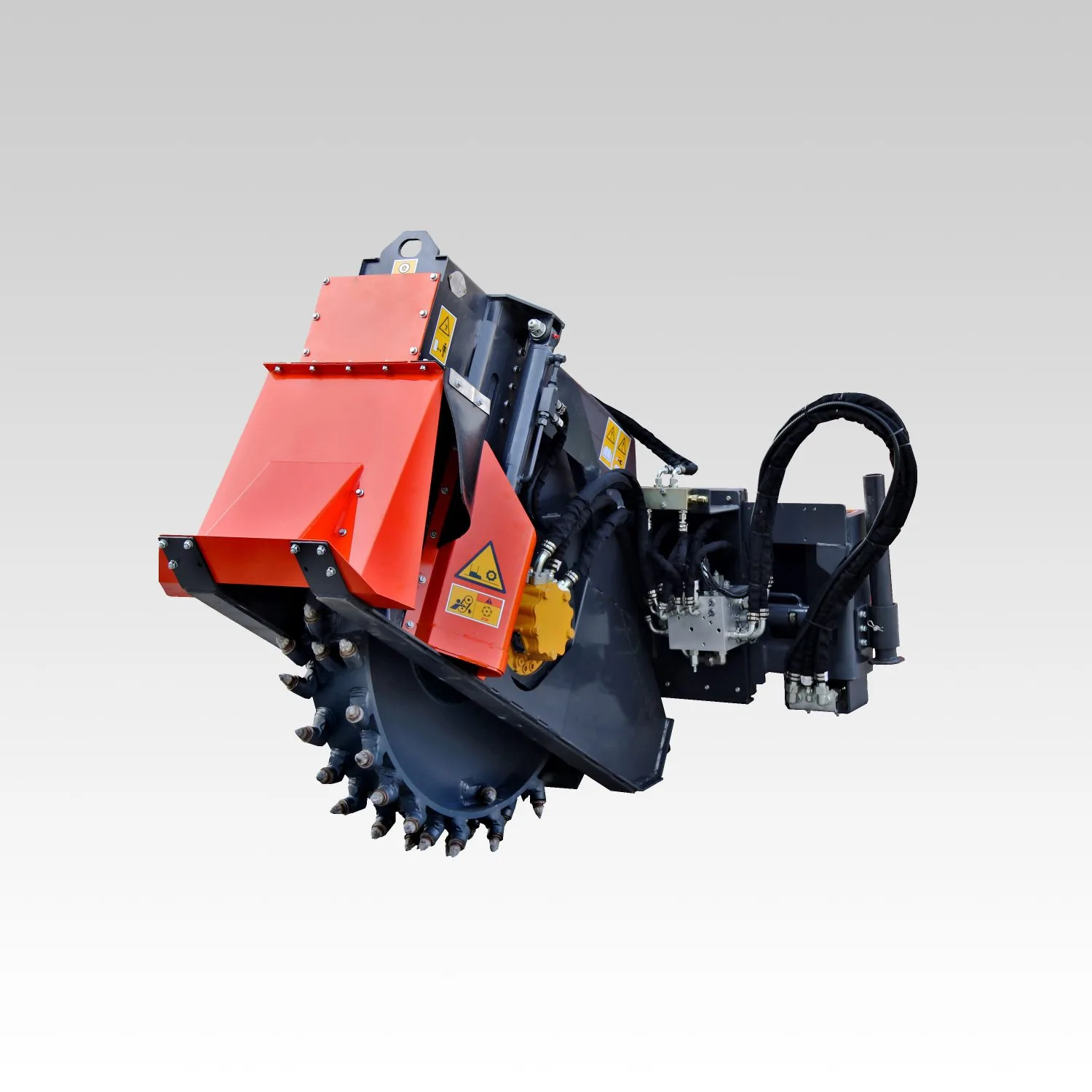
HCN's 0206 Series Cold Planer is designed for applications including asphalt and concrete repair, pothole and frost-heave work, curb cutting, pavement texturing, traffic-lane stripe removal, and work around manholes.
The attachment uses a milling drum to remove material from the existing surface. This makes it useful when the problem is not simply an uneven surface, but damaged or deteriorated pavement that needs to be removed before the next repair stage.
For example, a contractor repairing a localized section of asphalt may need to:
Remove the damaged pavement.
Prepare the repair area.
Add new material.
Compact the repaired section.
Finish and clean the surrounding surface.
The cold planer addresses the first stage of that process.
HCN 0206 Series Cold Planer Specifications
HCN currently lists three standard 0206 Series models:
| Model | Working Width | Working Depth | Hydraulic Flow | Pressure | Weight |
|---|---|---|---|---|---|
| 020612 | 300 mm | 150 mm | 120–130 L/min | 21 MPa | 580 kg |
| 020618 | 450 mm | 150 mm | 130–140 L/min | 21 MPa | 887 kg |
| 020620 | 500 mm | 150 mm | 130–140 L/min | 21 MPa | 980 kg |
The three models have the same listed overall dimensions, but their working widths, hydraulic requirements and weights differ. That makes exact model matching particularly important when purchasing a planer.
HCN also publishes other 0206 configurations, including higher-flow versions. For example, another current product listing shows working-flow ranges of 120–140 L/min and 120–200 L/min for different configurations.
This is why buyers should never assume that every attachment carrying the “0206” designation has the same hydraulic specification. The exact model and configuration should be confirmed before an order is placed.
2. What Does a Vibratory Roller Do?
A vibratory roller performs a very different job.
Instead of removing pavement, it compacts material by applying vibration and drum force to the surface.
The HCN 0205 Vibratory Roller is intended for applications such as roads, walkways, bike paths, parking lots, landscaping projects, bridges and other areas where material needs to be compacted.
This makes it particularly relevant after grading, filling, aggregate placement or pavement repair.
A simplified road-repair sequence might therefore look like this:
Cold planer → material preparation → replacement material → vibratory roller
The two attachments can complement each other, but one cannot replace the other.
HCN 0205 Vibratory Roller Specifications
HCN currently lists two 0205 models:
| Model | Overall Width | Weight | Dynamic Force | Working Flow | Working Pressure |
|---|---|---|---|---|---|
| 020560 | 980 mm | 890 kg | 31 kN @ 60 | 60–70 L/min | 20 MPa |
| 020572 | 980 mm | 955 kg | 37 kN @ 60 | 60–70 L/min | 20 MPa |
Both models use a 590 mm diameter roller and provide ±15° roller tilt according to HCN's published specifications. HCN also describes the attachment as having a hydraulically powered exciter system, isolated drums and an integral knockdown blade.
For procurement purposes, the important point is that the 0205 requires substantially less hydraulic flow than the 0206 Cold Planer.
3. The Biggest Difference: Removal vs. Compaction
The most important distinction is simple:
Choose a cold planer when you need to remove material.
Typical examples include:
Damaged asphalt removal
Pothole repair preparation
Frost-heave repair
Pavement surface removal
Curb cutting
Lane-marking removal
Localized milling
Pavement work around manholes
Concrete or asphalt surface preparation
Choose a vibratory roller when you need to compact material.
Typical applications include:
Road-base compaction
Aggregate compaction
Parking-lot construction
Pathways and walkways
Landscaping
Bridge and roadway work
Repair-area compaction
Soil or granular material compaction
The two attachments therefore sit at different points in the construction process.
Trying to select between them based only on attachment weight or skid steer horsepower can lead to the wrong purchasing decision.
4. Hydraulic Requirements Can Change the Purchasing Decision
Hydraulic compatibility is especially important with the cold planer.
The HCN 0206 Series requires approximately 120–140 L/min, depending on the model, while the HCN 0205 Vibratory Roller is listed at 60–70 L/min.
That is a major difference.
A skid steer capable of operating a vibratory roller is not automatically suitable for an HCN cold planer.
For example, the 0205 models require:
60–70 L/min hydraulic flow
20 MPa working pressure
The standard 0206 models require:
120–130 L/min for the 020612
130–140 L/min for the 020618 and 020620
21 MPa working pressure
Therefore, a contractor considering both attachments should check the machine's actual auxiliary hydraulic flow and pressure, rather than simply asking whether the loader is classified as a “large skid steer.”
HCN's own engineering guidance emphasizes this point: attachment compatibility must be checked against the specific attachment model, because hydraulic requirements can vary significantly across the product range.
5. Which Attachment Is Better for Pothole Repair?
For pothole repair, the answer depends on which stage of the repair is being considered.
If the objective is to remove damaged pavement and prepare a clean repair area, a cold planer is the more appropriate tool.
The HCN 0206 Series is specifically described for pothole and frost-heave repair and can remove a defined section of asphalt or concrete before replacement material is installed.
If the repair material has already been placed and the objective is to compact the repaired area, a vibratory roller is more appropriate.
This distinction is important for fleet planning. A contractor carrying out complete pavement-repair work may find that the two attachments serve different stages of the same project rather than competing for the same job.
6. Which Is Better for General Road Maintenance?
There is no universal winner.
The correct attachment depends on the work mix of the fleet.
A cold planer is usually the stronger choice when:
Pavement removal is a frequent requirement.
Contractors perform asphalt repair.
The fleet handles pothole and frost-heave rehabilitation.
Milling around utilities, curbs or manholes is common.
The skid steer has sufficient high-flow hydraulic capacity.
A vibratory roller is usually the stronger choice when:
Compaction work is frequent.
The machine is used for roads, paths or parking areas.
Contractors regularly place aggregate or fill.
Landscaping projects require surface compaction.
The available skid steer does not provide the hydraulic flow required by a cold planer.
For rental companies and equipment dealers, this distinction can also influence fleet utilization. A lower-flow attachment such as the 0205 Vibratory Roller may be appropriate for a different customer base than a high-flow 0206 Cold Planer.
7. Working Width Matters Too
Hydraulic compatibility is not the only consideration.
The 0206 Cold Planer offers working widths of:
300 mm
450 mm
500 mm
This allows the buyer to select a configuration based on the width of the repair area and the required milling operation.
The 0205 Vibratory Roller, meanwhile, has a listed overall width of 980 mm for both models.
The difference illustrates an important selection principle:
Do not compare attachments only by their overall physical size. Compare the dimension that directly affects productivity in the intended application.
For a planer, working width and depth directly affect how much pavement can be removed per pass.
For a roller, drum width, dynamic force and compaction conditions are more relevant to the actual compaction task.
8. Attachment Weight and Machine Capacity Still Matter
Even when hydraulic specifications match, the machine must still be physically capable of handling the attachment.
The HCN 0206 Series ranges from 580 kg to 980 kg across the three standard models, while the 0205 models weigh 890 kg and 955 kg.
This means the attachment's weight should be checked against the loader's rated operating capacity, lifting capability, stability and manufacturer recommendations.
A heavier attachment is not automatically better.
Likewise, a wider attachment is not automatically more productive.
The right configuration is the one that provides the required working performance while remaining within the machine's operating limits.
9. Can One Skid Steer Run Both Attachments?
Potentially, but this should be verified from the machine's actual specifications.
A skid steer may have enough capacity to operate the 0205 Vibratory Roller while lacking the auxiliary hydraulic flow required by a particular 0206 Cold Planer.
The reverse assumption should also be avoided: having a high-flow hydraulic circuit does not by itself prove that the machine can safely handle every planer configuration.
Before ordering, confirm:
Skid steer make and exact model
Auxiliary hydraulic flow
Auxiliary hydraulic pressure
Rated operating capacity
Machine lifting capacity
Attachment operating weight
Quick-attach or mounting configuration
Required working width
Application and expected material
Whether the attachment requires additional electrical or hydraulic functions
HCN's product pages specifically recommend confirming the machine brand, model, operating weight and hydraulic flow before ordering so that fitment can be checked.
10. Cold Planer or Vibratory Roller: A Practical Decision Table
| Your primary requirement | Recommended attachment |
|---|---|
| Remove damaged asphalt | Cold Planer |
| Remove a defined pavement section | Cold Planer |
| Prepare pothole repair areas | Cold Planer |
| Cut pavement near curbs | Cold Planer |
| Remove pavement around manholes | Cold Planer |
| Compact aggregate | Vibratory Roller |
| Compact road base | Vibratory Roller |
| Compact repaired surfaces | Vibratory Roller |
| Compact paths and walkways | Vibratory Roller |
| Landscaping compaction | Vibratory Roller |
| Need lower hydraulic flow | Vibratory Roller, subject to machine compatibility |
| Need pavement milling | Cold Planer, subject to high-flow requirements |
11. What Should Contractors Buy?
The answer depends on the contractor's actual workload.
Buy a cold planer if pavement removal is the bottleneck.
A contractor specializing in asphalt maintenance, utility work, localized road rehabilitation or pavement repair may gain more value from the 0206 Series because it gives the skid steer a dedicated milling function.
However, the hydraulic requirements must be confirmed carefully. The published 0206 specifications are substantially higher than those of the 0205 Vibratory Roller.
Buy a vibratory roller if compaction is the recurring requirement.
A contractor handling road base, aggregate, landscaping, parking areas or repair-area compaction may find the 0205 more appropriate.
Its published 60–70 L/min hydraulic-flow requirement is also considerably lower than the standard 0206 planer models.
Buy both when the workflow requires both operations.
For contractors performing complete road-repair operations, the two attachments can form part of a broader skid steer attachment package:
Milling → Material removal → Replacement → Grading → Compaction
In that workflow, the cold planer and vibratory roller are complementary rather than competing products.
12. Procurement Checklist for B2B Buyers
Before requesting a quotation, equipment dealers, contractors, rental companies and fleet managers should prepare the following information:
Machine information
Manufacturer
Exact machine model
Operating weight
Rated operating capacity
Auxiliary hydraulic flow
Auxiliary hydraulic pressure
Quick-attach or coupler type
Application information
Asphalt, concrete, aggregate or soil
Required working width
Required working depth
Typical job size
Expected working conditions
Daily or seasonal utilization
Commercial information
Required quantity
Destination country
Delivery requirements
OEM or private-label requirements
Spare-parts requirements
Desired lead time
This information gives the supplier enough information to evaluate the actual configuration instead of making a decision based on a generic machine category.
HCN's current quotation process similarly asks buyers to provide the machine model, attachment requirement, quantity and destination information, with technical fitment checked before quotation.
13. Final Recommendation
The choice between a cold planer and a vibratory roller should be based on what the attachment needs to accomplish, not on which attachment appears more powerful.
Choose the HCN 0206 Series Cold Planer when the primary task is milling or removing asphalt and concrete. Its published models provide 300–500 mm working widths and 150 mm working depth, with hydraulic-flow requirements of 120–140 L/min for the standard models.
Choose the HCN 0205 Vibratory Roller when the primary task is compaction. Its two published models weigh 890 kg and 955 kg, use 60–70 L/min hydraulic flow, and are designed for roadways, paths, parking areas, landscaping and related compaction work.
For either attachment, the final selection should be made using the exact machine model and exact attachment configuration. Hydraulic flow, pressure, weight, mounting interface and application requirements all need to be checked before purchase.
If the machine's hydraulic data or mounting configuration is unclear, it is better to confirm the information with the machine manufacturer or HCN before ordering than to select an attachment based on a general “skid steer compatible” description.
FAQ
1. Is a cold planer the same as a vibratory roller?
No. A cold planer removes and mills pavement, while a vibratory roller compacts material. They are used for different stages of road construction and repair.
2. Which requires more hydraulic flow, a cold planer or vibratory roller?
The HCN 0206 Cold Planer requires significantly more hydraulic flow. The standard 0206 models are listed at 120–130 L/min or 130–140 L/min, while the 0205 Vibratory Roller is listed at 60–70 L/min.
3. Can a skid steer use both a cold planer and vibratory roller?
Potentially, but the exact machine specifications must be checked. A machine suitable for the 0205 may not have sufficient auxiliary hydraulic flow for a particular 0206 configuration.
4. Which HCN cold planer model should I choose?
The current standard 0206 Series includes 020612, 020618 and 020620, with working widths of 300, 450 and 500 mm respectively. Hydraulic flow and weight also vary by model. The correct choice depends on the machine and application.
5. Which attachment is better for pothole repair?
A cold planer is appropriate when damaged pavement needs to be removed before repair. A vibratory roller is appropriate when the repair material needs to be compacted. In a complete repair workflow, both may be useful.
6. What hydraulic pressure does the HCN 0206 Cold Planer require?
The current 0206 Series listing specifies 21 MPa working pressure. The exact hydraulic configuration should still be confirmed against the machine and selected model before ordering.
7. What information should I provide when requesting an attachment quotation?
Provide the machine brand and exact model, hydraulic flow and pressure, attachment/application, quantity and destination country. Mounting drawings or additional machine information can also help with fitment confirmation.
8. Can HCN provide OEM or private-label attachment programs?
Yes. HCN's current company information states that it supports dealer, distributor and private-label programs, including options for mounting, hydraulics, color, logo, packaging and related export requirements.

 +86 185 5285 3111
 +86 185 5285 3111
 nancy@hcn-tech.com
