




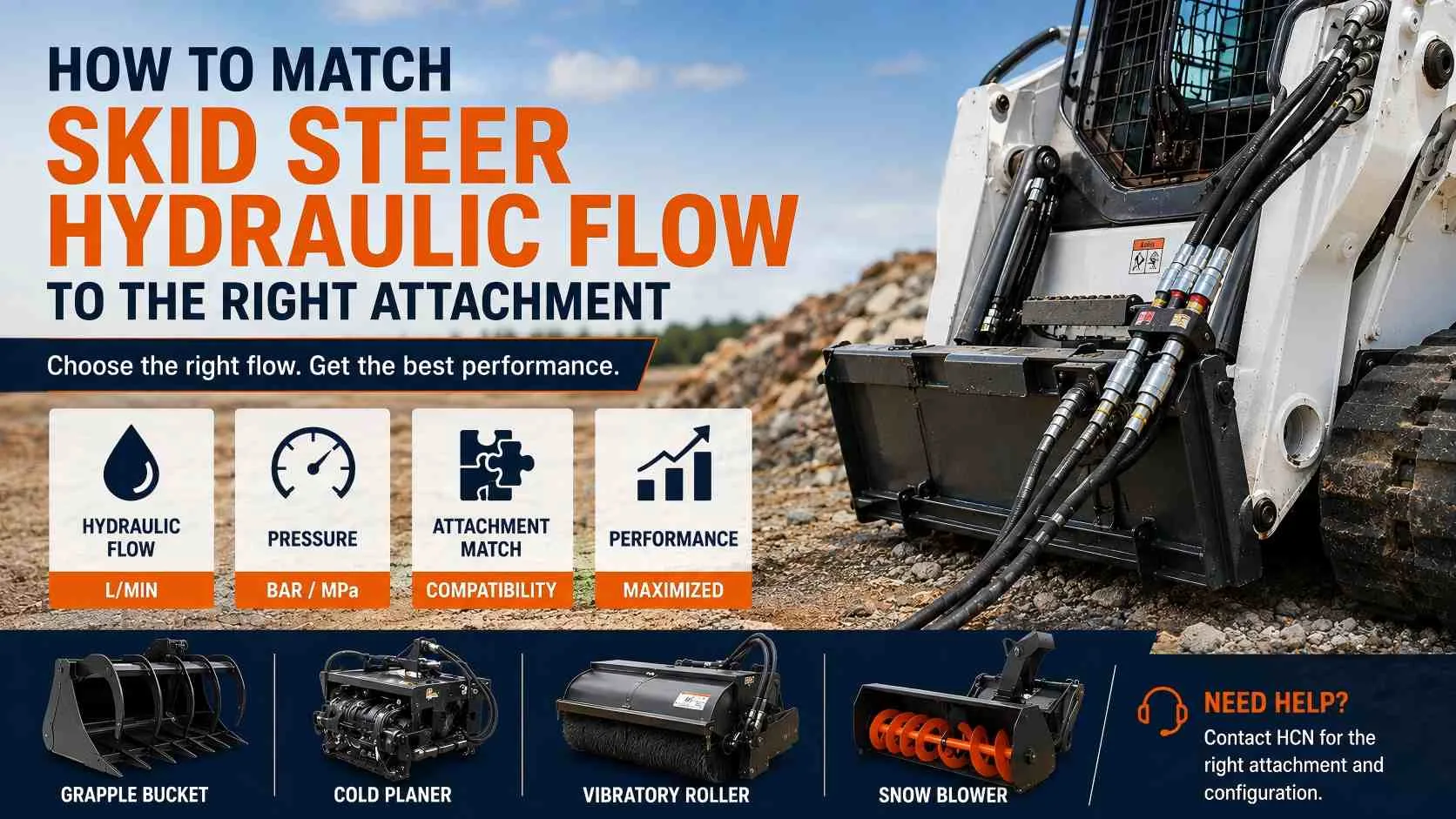
Choosing a skid steer attachment is not only about working width, weight, or machine horsepower. Hydraulic flow is one of the most important compatibility factors, especially when selecting high-performance attachments such as cold planers, snow blowers, vibratory rollers, and other hydraulic tools.
If the attachment requires more hydraulic flow than the loader can provide, productivity can suffer. If the attachment is matched incorrectly, hydraulic performance, operating efficiency, and component life may also be affected.
This guide explains how contractors, equipment dealers, rental companies, and fleet managers can evaluate hydraulic flow before purchasing a skid steer attachment.
1. Start With the Loader's Auxiliary Hydraulic Specifications
The first step is to identify the auxiliary hydraulic flow and pressure available from the skid steer loader.
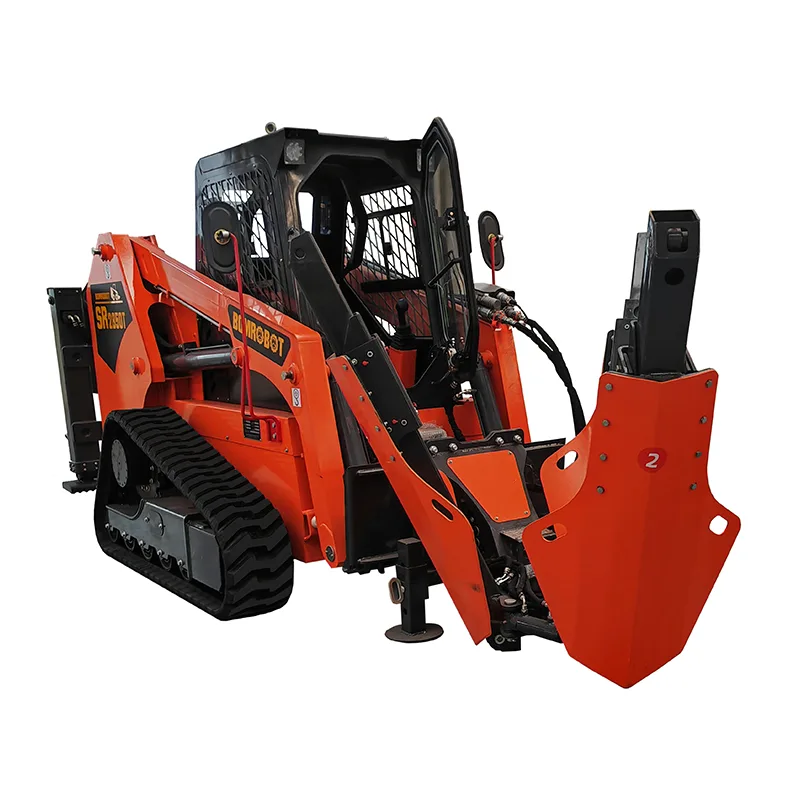
For example, HCN's SR770T Mini Track Skid Steer Loader lists an attachment hydraulic flow rate of 45–60 L/min and an attachment oil supply pressure of 18 MPa.
This information should be compared directly with the hydraulic requirements of the attachment rather than relying only on the loader's engine horsepower.
2. Compare Flow Requirements Before Comparing Attachment Size
Different attachments can have very different hydraulic requirements, even when they are designed for similar machines.
| HCN Attachment | Published Hydraulic Flow | Typical Application |
|---|---|---|
| 0403 Heavy Duty Grapple Bucket | 20–30 L/min | Material handling, construction, forestry |
| 0205 Vibratory Roller | 60–70 L/min | Roads, paths, landscaping, compaction |
| 0209H Snow Blower | 75–150 L/min | Snow removal |
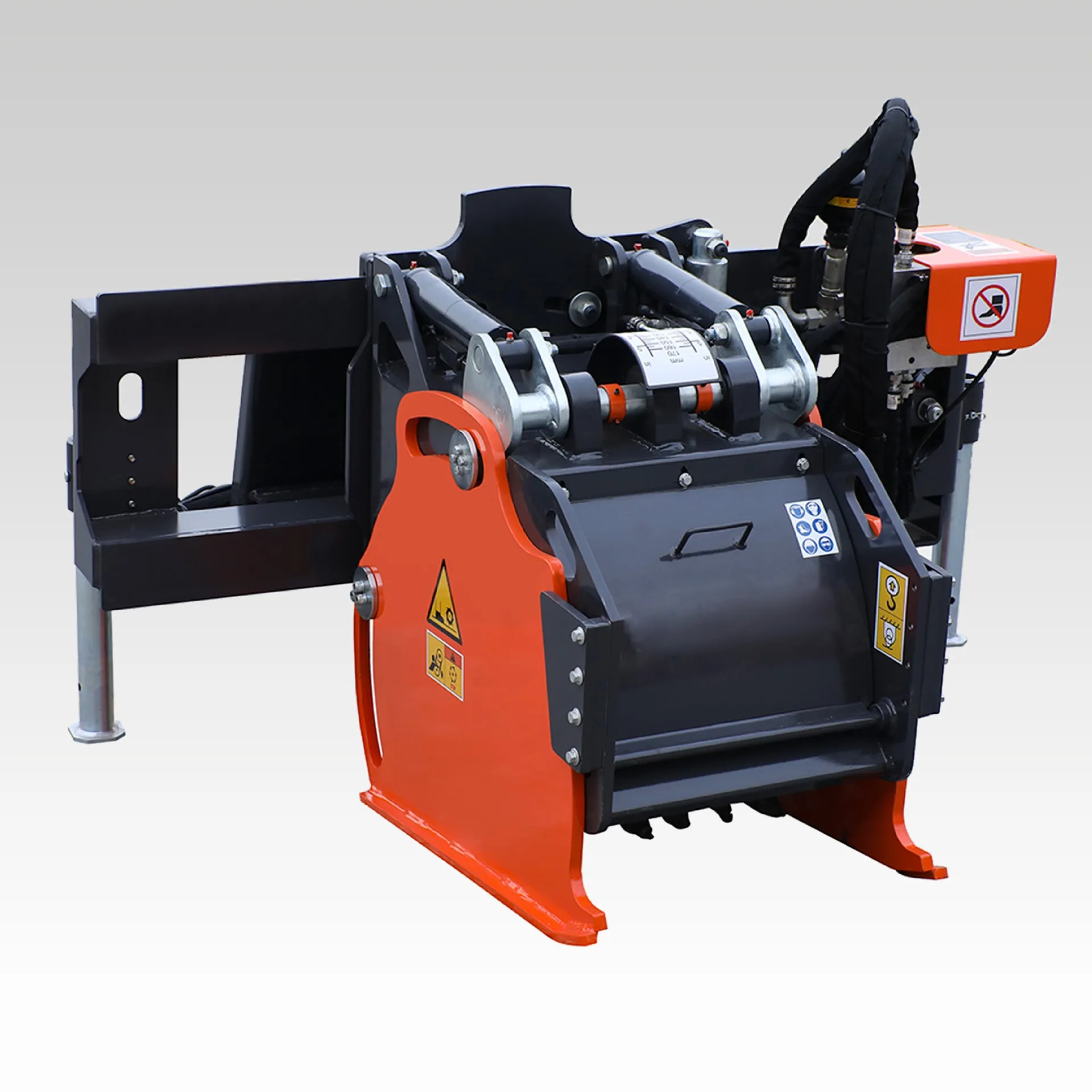
| 0206 Series Cold Planer | 120–130 or 130–140 L/min depending on model | Asphalt and concrete milling |
These figures show why simply asking whether an attachment “fits a skid steer” is not enough. The actual auxiliary hydraulic capacity must be checked against the specific attachment model.
3. High-Flow Attachments Need Special Attention
Some HCN attachments require substantially higher hydraulic flow than general-purpose attachments.
For example, the HCN 0206 Series Cold Planer includes models 020612, 020618, and 020620. Their published flow requirements are 120–130 L/min for the 020612 and 130–140 L/min for the 020618 and 020620 models, with a working pressure of 21 MPa.
HCN also lists a separate 0206 Cold Planer configuration with models such as 020618I and 020640, where the published working flow is 120–140 L/min and 120–200 L/min respectively.
This is an important purchasing point: do not assume that every 0206 Cold Planer has the same hydraulic requirements. The exact model should always be confirmed before ordering.
4. Match the Attachment to the Job, Not Just the Machine
Hydraulic flow is only one part of attachment selection. The application should determine the type of attachment first, followed by hydraulic compatibility.
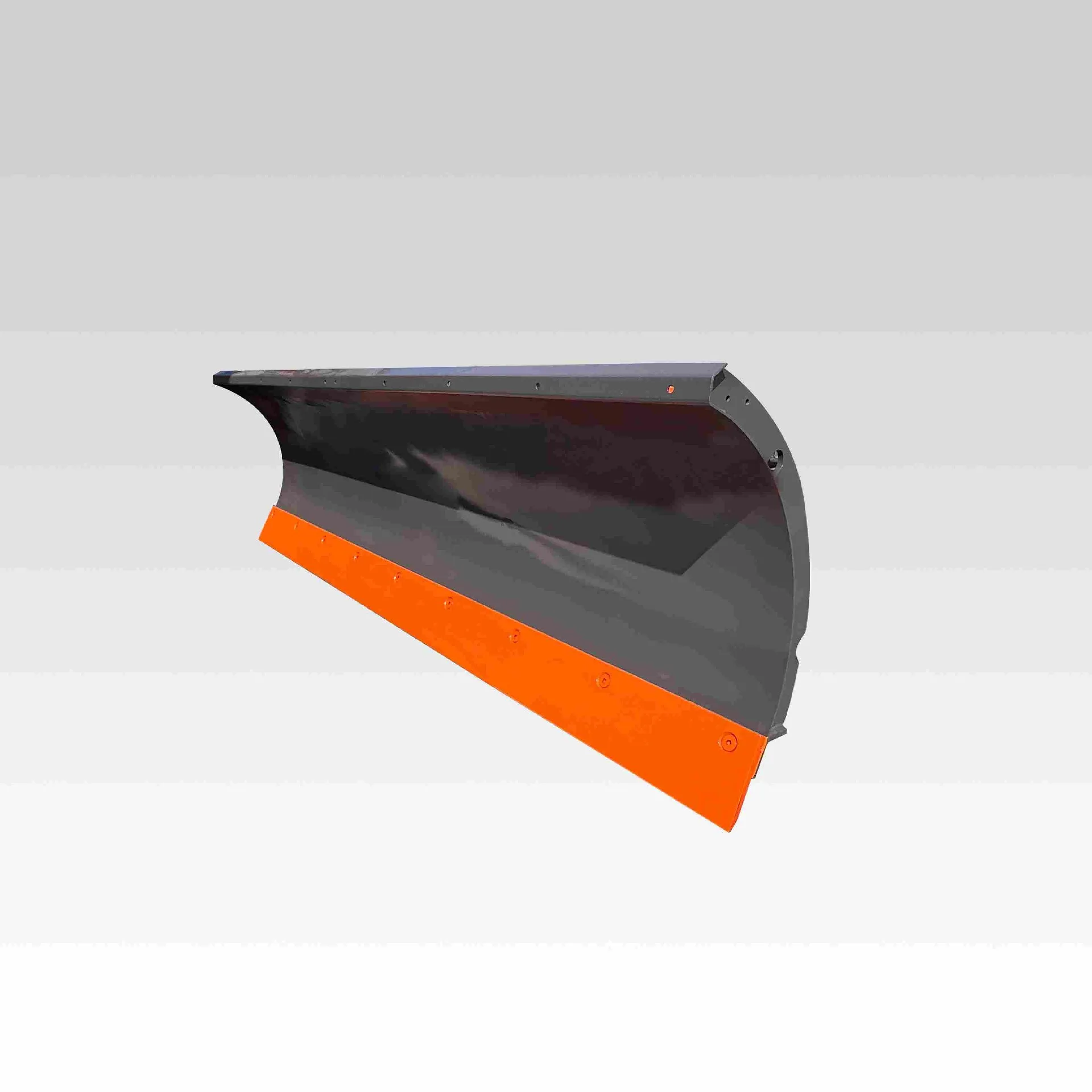
Snow removal: A hydraulic snow blower is suitable when the job requires moving heavy or wet snow and controlled discharge. HCN's 0209H Snow Blower is listed with a hydraulic flow range of 75–150 L/min.
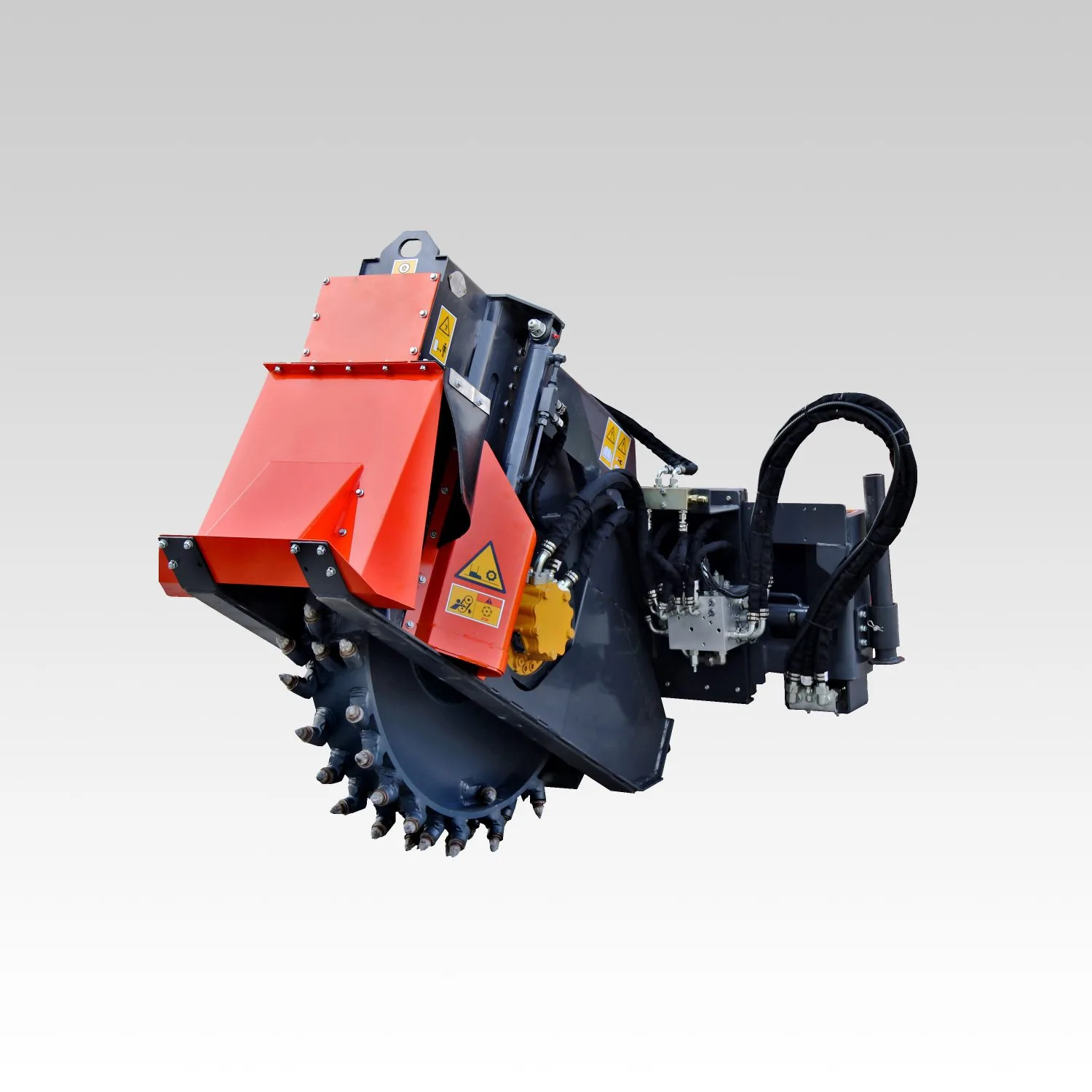
Road maintenance: A cold planer or vibratory roller may be more appropriate depending on whether the task involves pavement removal or surface compaction.
Material handling: Grapple buckets generally require considerably less hydraulic flow than high-flow milling equipment.
Forestry: Hydraulic requirements should be checked carefully because mulchers and other high-demand forestry attachments can place significant demands on the loader's auxiliary system.
5. Do Not Ignore Hydraulic Pressure
Flow and pressure work together, but they are not interchangeable specifications.
For example, HCN's 0205 Vibratory Roller lists a working flow of 60–70 L/min and working pressure of 20 MPa. The 0206 Series Cold Planer lists 21 MPa pressure, while the 0209H Snow Blower lists a maximum allowable pressure of 20 MPa.
A loader should therefore be checked for both auxiliary flow and operating pressure before an attachment is selected.
6. A Simple Purchasing Checklist
Before requesting a quotation, contractors and equipment buyers should prepare the following information:
Skid steer loader make and model
Auxiliary hydraulic flow rate
Auxiliary hydraulic pressure
Standard-flow or high-flow hydraulic system
Quick-attach or mounting configuration
Required working width and operating depth
Primary application
Expected working conditions
This information allows the attachment supplier to confirm whether the selected configuration is appropriate instead of relying on a general machine category.
7. Why Exact Model Matching Matters
HCN's product range includes attachments with significantly different hydraulic requirements. For example, the Heavy Duty Grapple Bucket lists 20–30 L/min, while the 0205 Vibratory Roller requires 60–70 L/min and the 0206 Cold Planer requires more than 120 L/min depending on configuration.
Consequently, the correct approach is to match loader → hydraulic system → attachment model → application, rather than simply matching loader size to attachment size.
FAQ
What hydraulic flow does a skid steer attachment need?
It depends on the attachment. HCN products range from approximately 20–30 L/min for some grapple buckets to more than 120 L/min for certain cold planer configurations.
Is higher hydraulic flow always better?
No. The attachment should operate within its specified hydraulic flow and pressure range. Excessive flow should not be assumed to improve performance.
Can a standard-flow skid steer operate a high-flow attachment?
Not necessarily. The loader's auxiliary hydraulic capacity must meet the attachment manufacturer's requirements.
Why is hydraulic pressure important?
Pressure affects the hydraulic system's ability to generate working force and torque. Both pressure and flow should be checked during compatibility evaluation.
Does attachment width determine hydraulic requirements?
No. Working width is only one specification. Two attachments with similar widths can have very different hydraulic requirements.
What information should I provide when requesting an attachment quotation?
Provide the loader model, auxiliary flow, hydraulic pressure, application, and required attachment type. This gives the supplier enough information to recommend the appropriate configuration.
Where can I confirm the hydraulic requirements of an HCN attachment?
Check the technical specifications for the exact HCN model. If the required information is not clearly listed, contact HCN before placing an order.
Conclusion
Hydraulic compatibility should be one of the first checks when selecting a skid steer attachment. By comparing auxiliary flow, operating pressure, attachment configuration, and application requirements, buyers can reduce compatibility problems and make more informed equipment purchasing decisions.
HCN offers a broad range of skid steer attachments for construction, road maintenance, snow removal, landscaping, forestry, and material handling. For the correct configuration and current specifications, contact HCN with your loader model and hydraulic information.
 +86 185 5285 3111
 +86 185 5285 3111
 nancy@hcn-tech.com
